14 vs 16mm Pickleball Paddles: Which One Is Best For You?
The best choice between a 14mm and 16mm paddle depends on whether you prioritize raw power and speed or soft control and stability. Selecting the right gear can be the difference between winning a long rally at the kitchen or watching your ball fly out of bounds. You probably know the frustration of a “pop up” that gives your opponent an easy smash, or a drive that lacks the “oomph” to get past a defender. This article breaks down the technical and practical differences to help you decide which equipment will elevate your game.
Table of Contents
Why does paddle thickness matter for your game?
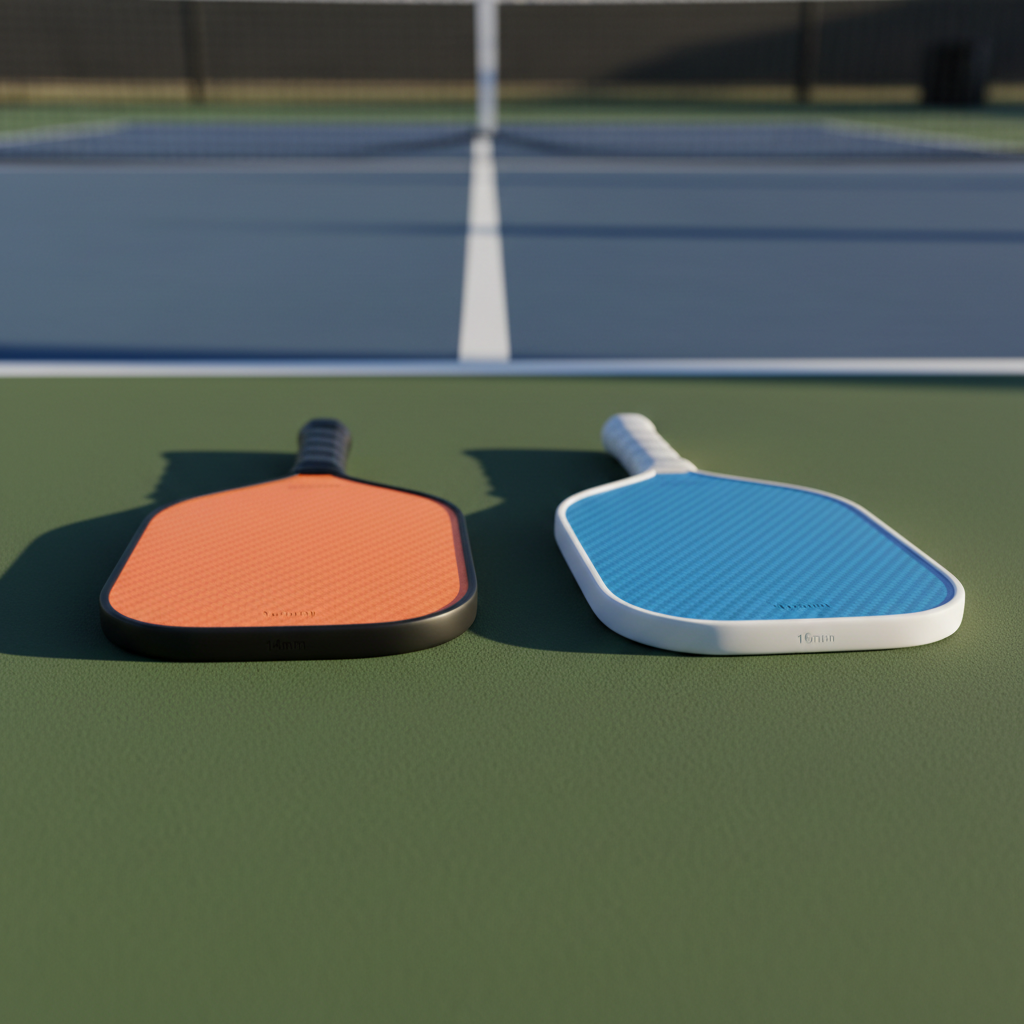
Paddle thickness matters because it dictates how the core of your gear absorbs and returns energy when the ball makes contact. When you compare 14 vs 16mm Pickleball Paddles, you are essentially choosing between a trampoline and a sponge. A thinner core provides a stiffer surface that launches the ball with higher velocity, while a thicker core dampens the impact to give you more “dwell time” for placement. Understanding these physics is the first step toward finding a tool that complements your natural swing and tactical approach.
What are the core mechanics of honeycomb depth?
The internal structure of your gear is usually a polymer honeycomb that acts as the engine of your performance. Here is the kicker: a 16mm core has more material to trap vibrations, which prevents the ball from bouncing off too aggressively.
- Deeper honeycomb cells absorb more kinetic energy.
- Thinner cells offer a more rigid response for “pop.”
- Core depth influences how much the paddle face flexes during impact.
- Mass distribution changes based on the thickness of these internal walls.
How does thickness change the physics of ball flight?
You might think two millimeters is a tiny difference, but in the world of competitive sports, it changes the entire trajectory of your shot. But wait, there’s more! A 14mm paddle cuts through the air faster, allowing you to generate more head speed during a baseline drive.
- Reduced air resistance leads to faster swing paths.
- Energy return is higher on a thinner, stiffer surface.
- Thicker paddles create a “muted” feel that helps keep dinks low.
- Vibration transfer to the handle is more prominent in thinner builds.
Key Takeaway: Thickness is the primary factor that balances the trade-off between power and control by altering energy absorption.
| Feature | 14mm Paddle | 16mm Paddle |
|---|---|---|
| Primary Focus | Power & Speed | Control & Stability |
| Feel | Sharp & Responsive | Soft & Muted |
| Maneuverability | High Aerodynamics | Moderate Stability |
| Forgiveness | Concentrated | Expanded |
The physical depth of your paddle core is the most significant hardware variable affecting your consistency and striking force.
Is 16mm the right choice for control players?
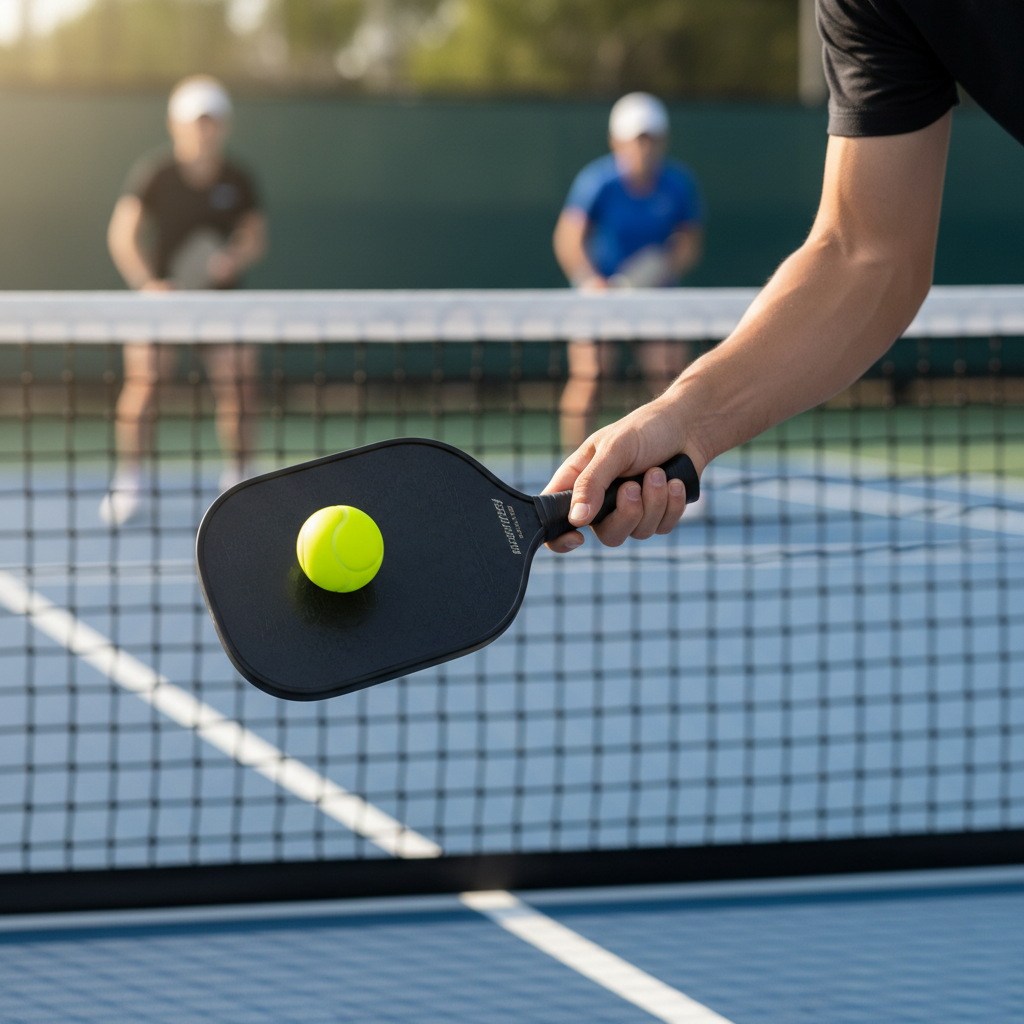
The 16mm option is almost always the right choice for players who prioritize defensive stability, soft dinks, and third-shot drops. When looking at 14 vs 16mm Pickleball Paddles, the thicker version is designed to be a “forgiving” tool that minimizes unforced errors. It allows you to take the heat off a fast-incoming ball and place it softly back into the kitchen. If you find yourself struggling with “pop-ups” that your opponents easily smash, switching to a thicker core might be the solution you need to stabilize your defensive game.
Why is soft kitchen play easier with a 16mm core?
Winning at the kitchen line is all about touch and finesse rather than brute force. Here is the deal: a 16mm core acts like a shock absorber, making it much easier to “catch” the ball on the face before sending it back.
- Increased dwell time allows for better directional control.
- Energy dampening prevents the ball from bouncing too far.
- Consistent response across the face helps in off-center dinks.
- Stability during blocks allows you to reset the point effectively.
Can a thicker paddle improve your defensive resets?
When an opponent hits a hard drive at your feet, you need a paddle that won’t twist or over-react. Believe it or not, the extra mass in a 16mm core provides the structural integrity needed to deaden those aggressive shots.
- Mass through the center reduces paddle “flutter” on impact.
- Lower exit velocity gives you more time to recover your position.
- The “plush” feel provides confidence during high-pressure rallies.
- Absorbing pace makes it easier to transition from defense to offense.
Key Takeaway: Control-oriented players benefit from the 16mm core’s ability to absorb energy and provide a stable platform for precision shots.
| Metric | 16mm Performance | Player Advantage |
|---|---|---|
| Ball Absorption | High | Easier to reset the point |
| Touch Sensitivity | Excellent | Better dinking consistency |
| Impact Stability | High | Less paddle twisting |
| Forgiveness | High | Fewer errors on off-center hits |
A 16mm thickness is the industry standard for the “soft game,” making it the go-to for tactical players.
Do you need a 14mm paddle for more power?
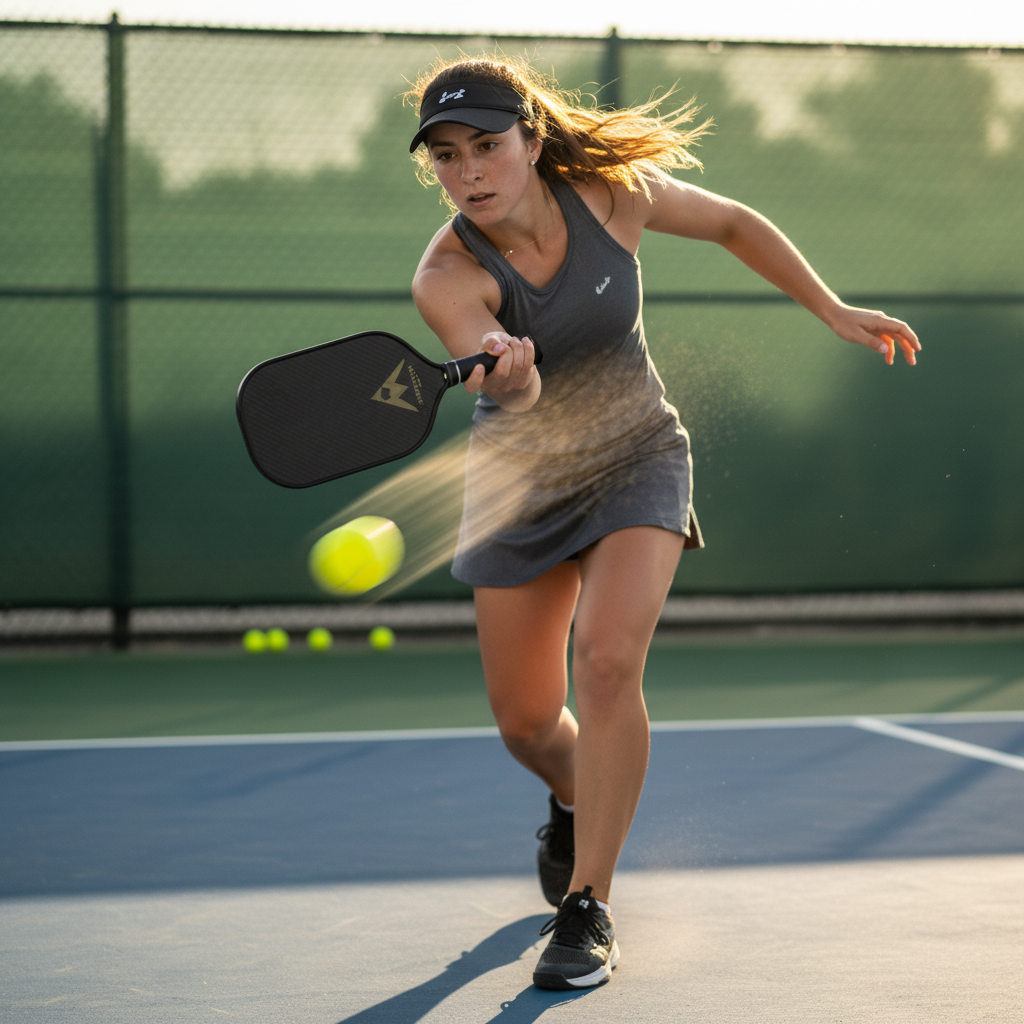
Yes, you should choose a 14mm paddle if your primary goal is to overwhelm opponents with ball speed and aggressive baseline drives. When comparing 14 vs 16mm Pickleball Paddles, the 14mm version provides a “crisp” or “poppy” feel that translates into higher exit velocity. This means the ball leaves the paddle face faster with the same amount of effort. Aggressive players who like to end points quickly often prefer this thinner profile because it rewards a fast swing and a sharp wrist snap.
How does a thinner core increase your “pop”?
“Pop” is the term players use to describe how quickly a ball explodes off the paddle face. But here’s the kicker: the stiffness of a 14mm core means less energy is lost to internal friction, sending more force directly back into the ball.
- Rigid core structures offer a more immediate energy transfer.
- Less compression in the honeycomb results in a faster rebound.
- A “lively” face helps with flick shots and aggressive volleys.
- Feedback is instantaneous, allowing for micro-adjustments in swing power.
Why does aerodynamics matter for power hitters?
Power isn’t just about the core; it’s about how fast you can swing the tool through the air. Ready for the good part? A thinner 14mm paddle has a lower profile, which reduces drag and lets you swing harder without extra physical strain.
- Faster head speed leads to higher momentum at impact.
- Improved maneuverability helps with quick overhead smashes.
- The sleek profile is easier to whip through the hitting zone.
- Less wind resistance means your arm stays fresh during long matches.
Key Takeaway: The 14mm core is the ultimate choice for offensive players who want maximum ball speed and a responsive, powerful feel.
| Attribute | 14mm Benefit | Strategic Result |
|---|---|---|
| Exit Speed | High | Harder drives and serves |
| Swing Speed | Increased | Faster reactions and power |
| Feedback | Sharp | Better sense of strike quality |
| Core Stiffness | High | Immediate ball propulsion |
If you want to play a “heavy” game that keeps your rivals on their heels, the 14mm thickness is your best weapon.
How does thickness change the sweet spot size?
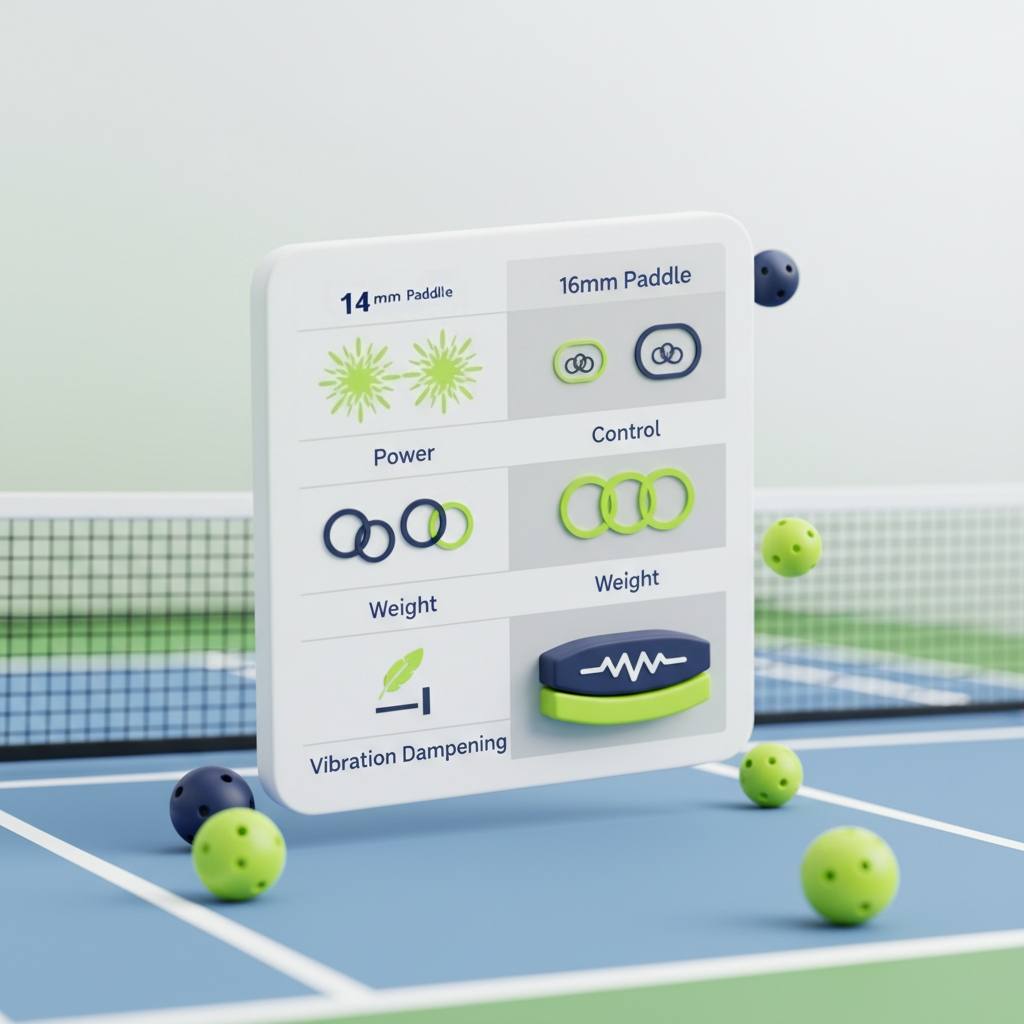
Thickness significantly impacts the sweet spot because a deeper core distributes energy more evenly across the hitting surface. In the battle of 14 vs. 16mm Pickleball Paddles, the 16mm version almost always offers a larger and more forgiving sweet spot. This means that if you hit the ball slightly away from the center of the paddle, you will still get a predictable and controlled result. Thinner 14mm paddles tend to have a “hotter” but more concentrated sweet spot, which rewards precision but punishes mishits.
What happens when you hit off-center?
Most amateur players don’t hit the exact center of the paddle every time. Here is the real story: a thicker core uses its volume to support the outer edges of the face, preventing the “dead” feeling you get when hitting near the rim.
- Energy is dispersed across more honeycomb cells.
- The “effective” hitting area is expanded toward the perimeter.
- Twist weight (stability) is generally higher in thicker models.
- Vibration is minimized even on shots that miss the center.
Does a smaller sweet spot offer any advantages?
You might wonder why anyone would want a smaller sweet spot. But wait, there’s more! Advanced players with exceptional hand-eye coordination often prefer the concentrated feel of a 14mm paddle because it tells them exactly how well they struck the ball.
- The “power zone” is more explosive when hit perfectly.
- Tactile feedback is more nuanced for precision placement.
- Players can feel the difference between a center hit and a slight miss.
- It encourages better technique by demanding accurate striking.
Key Takeaway: 16mm paddles provide a larger safety net for average players, while 14mm paddles offer a concentrated power zone for experts.
| Sweet Spot Trait | 14mm Core | 16mm Core |
|---|---|---|
| Size | Concentrated | Expanded |
| Forgiveness | Moderate | High |
| Edge Stability | Lower | Higher |
| Feedback Clarity | Sharp | Muted |
Choosing a 16mm core can instantly reduce your unforced errors by making your paddle more reliable across the entire face.
Can core thickness help reduce elbow pain?
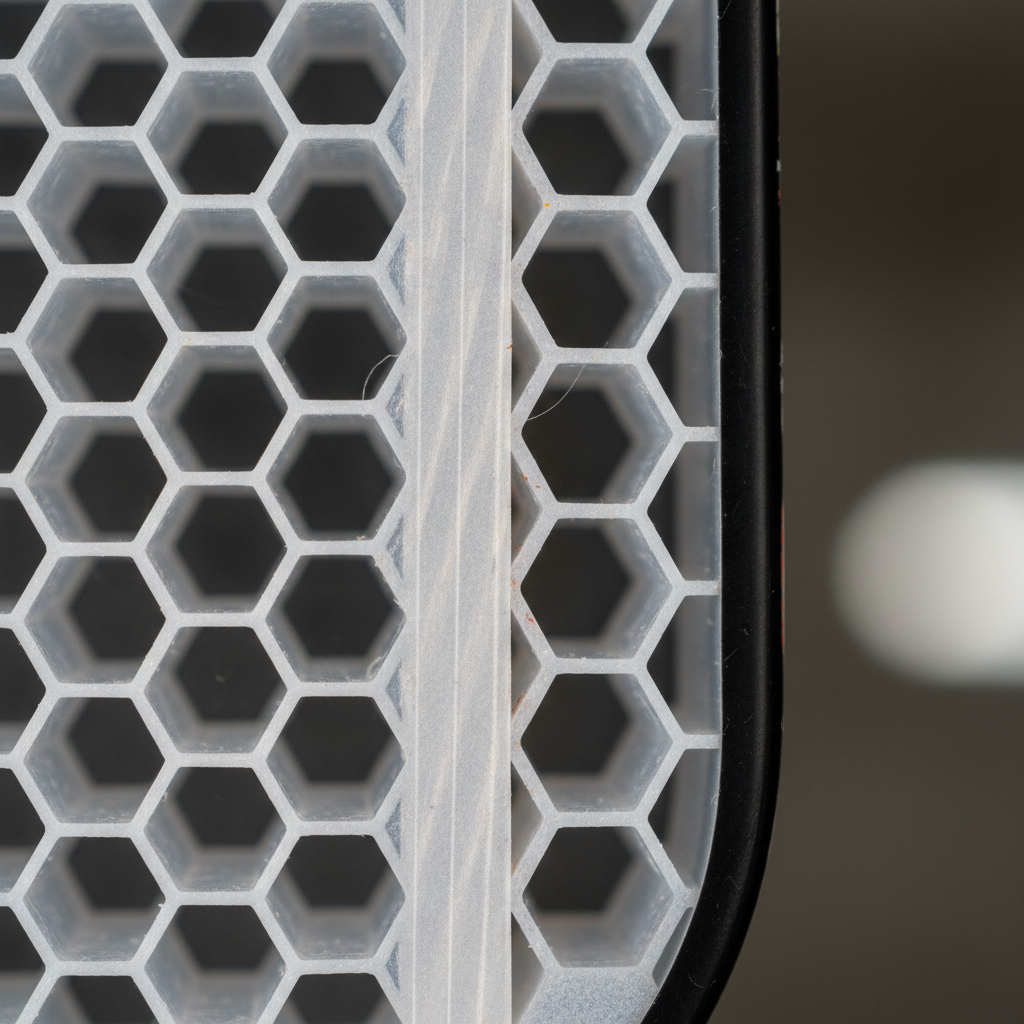
Yes, a thicker 16mm paddle is significantly better for reducing vibration and preventing common injuries like tennis elbow. When evaluating 14 vs 16mm Pickleball Paddles, you must consider the amount of shock that travels into your arm with every hit. A 16mm core acts as a buffer, soaking up the “stinging” vibrations that can irritate your tendons over time. For players who play multiple times a week or already have joint sensitivity, the health benefits of a thicker paddle far outweigh any minor loss in power.
How does vibration dampening protect your joints?
Every time the ball hits your paddle, a wave of energy travels through the core and into the handle. This is where it gets interesting: the extra air pockets and material in a 16mm core trap these waves before they reach your wrist and elbow.
- Thicker polymer walls dissipate kinetic energy faster.
- High-frequency vibrations are “muted” by the deep honeycomb.
- The impact feels “softer” rather than “sharp” or “jarring.”
- Muscle fatigue is reduced by minimizing the shock of every strike.
Is a 14mm paddle dangerous for your arm?
A 14mm paddle isn’t necessarily dangerous, but it demands more from your body’s natural shock absorbers. You might be wondering if a soft grip can fix this, but the truth is that the core’s thickness is the primary defense against internal vibration.
- Stiffer cores transmit more feedback directly to the hand.
- Hard hits can cause a “stinging” sensation on a thin paddle.
- Players with existing injuries may find their pain worsens with thin gear.
- Long sessions can lead to faster forearm and elbow exhaustion.
Key Takeaway: Thicker 16mm paddles are the superior choice for joint health and long-term injury prevention due to their shock-absorbing properties.
| Health Factor | 14mm Paddle | 16mm Paddle |
|---|---|---|
| Vibration Level | High | Low |
| Shock Absorption | Minimal | Maximum |
| Joint Strain | Higher Potential | Lower Potential |
| Comfort Level | Aggressive | Plush |
Prioritizing a 16mm core is a smart strategic move for any player who wants to enjoy the game pain-free for years to come.
Should beginners start with a thicker paddle?
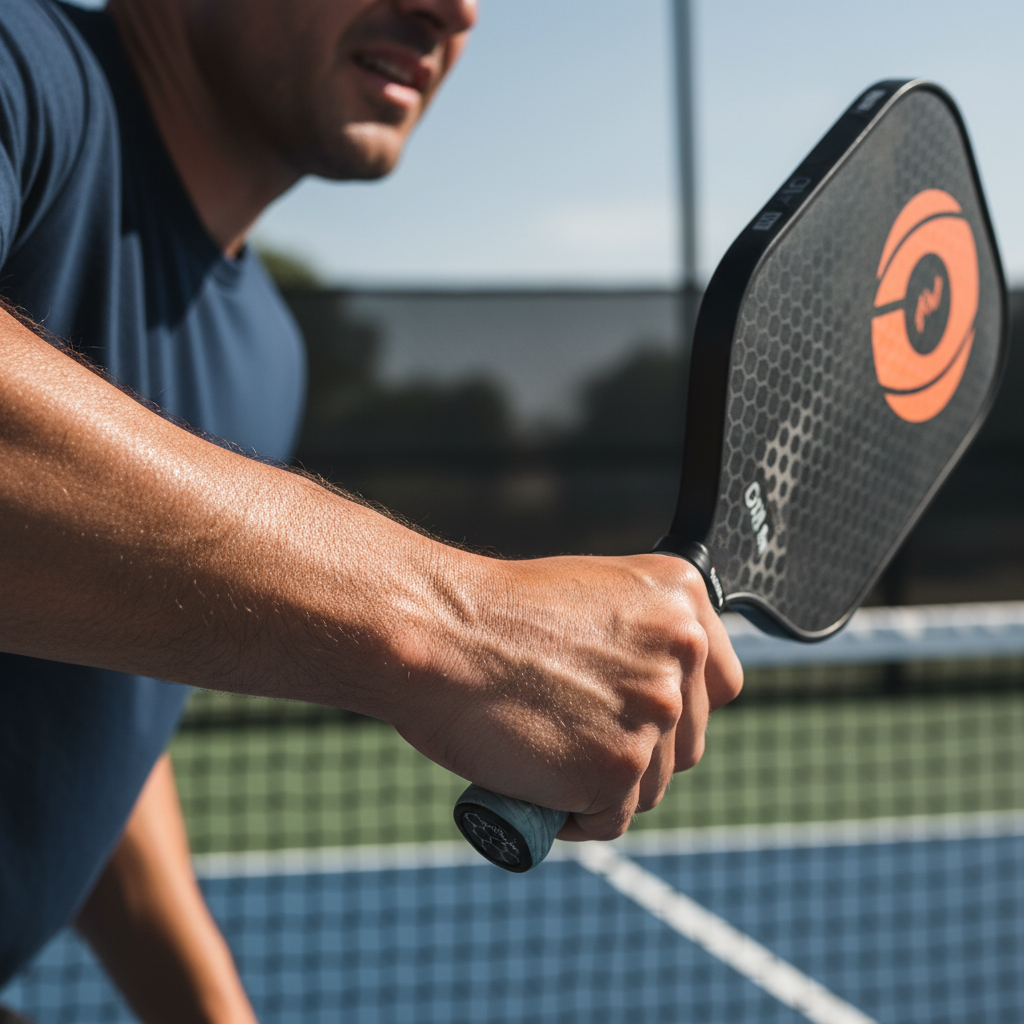
Most experts recommend that beginners start with a 16mm paddle because it provides a more stable and predictable learning experience. In the comparison of 14 vs 16mm Pickleball Paddles, the 16mm version helps newcomers control the ball’s depth and speed more easily. When you are just learning the mechanics of a dink or a serve, you don’t want a paddle that is too “lively” or sensitive. A thicker core acts as a safety net, allowing you to focus on your footwork and court positioning without worrying about the ball flying out of bounds.
Why is consistency more important than power for learners?
In the early stages of playing, the person who makes the fewest mistakes usually wins the game. Here is the real story: a 16mm paddle helps you keep the ball in play by absorbing your accidental “over-swings.”
- The larger sweet spot reduces the penalty for poor timing.
- Predictable bounce helps in building muscle memory.
- Lower power levels prevent beginners from hitting long.
- Soft feedback helps in developing a “feel” for the kitchen game.
Can a beginner handle a 14mm paddle?
While a beginner can certainly play with a 14mm model, they may find the learning curve to be much steeper. But wait, there’s more! New players often struggle with “touch,” and a thinner paddle can feel like it’s launching the ball uncontrollably.
- Mishits on a 14mm paddle are more likely to fail to clear the net.
- The “pop” can be frustrating when trying to hit soft drop shots.
- Faster hand speed isn’t helpful if you haven’t mastered aiming yet.
- Beginners may develop bad habits by trying to “guide” a poppy paddle.
Key Takeaway: A 16mm thickness provides the stability and forgiveness that beginners need to build confidence and master the basics.
| Learning Phase | Recommended Thickness | Why? |
|---|---|---|
| Weeks 1-12 | 16mm | Maximum forgiveness and control |
| Intermediate | 14mm or 16mm | Based on emerging playstyle |
| Advanced | Choice | Tactical specialization |
Starting with a 16mm core ensures you spend more time playing rallies and less time chasing balls that you hit too hard.
Does thickness affect your quick hands at net?

Yes, a 14mm paddle gives you a distinct advantage in “hand speed” battles at the net because of its superior aerodynamics. When we look at 14 vs 16mm Pickleball Paddles, the thinner profile is much easier to move through the air quickly. In fast-paced volley exchanges where milliseconds matter, being able to flip your paddle from backhand to forehand can be the difference between winning the point or getting hit by the ball. If you pride yourself on your reflexes and aggressive net play, the 14mm core is designed for your style.
Why does air resistance matter at the kitchen line?
The kitchen line is where the fastest exchanges in the game take place. Here is the kicker: a thicker paddle has a larger “frontal area,” which creates more drag as you swing it.
- Thinner paddles slice through the air with less resistance.
- Quick transitions are easier with a lower-profile frame.
- Reaction time is improved because the tool moves faster.
- Maneuverability is key during “firefights” at the net.
How does weight distribution play a role?
It’s not just about the thickness; it’s about how the weight feels during a swing. Ready for the good part? Many 14mm paddles are balanced to feel “head-light,” which further increases your ability to react to surprise shots.
- Low swing weight allows for faster wrist snaps.
- Maneuvering around the body is more fluid with thin gear.
- Blocking a smash feels more instantaneous.
- Players can “reset” their paddle position faster after a hit.
Key Takeaway: 14mm paddles are the preferred choice for net specialists who need maximum speed and maneuverability.
| Speed Metric | 14mm Performance | 16mm Performance |
|---|---|---|
| Air Drag | Very Low | Moderate |
| Hand Speed | Maximum | Average |
| Volley Reaction | Instant | Controlled |
| Maneuverability | Excellent | Good |
If you enjoy the fast-paced “war” at the net, a 14mm paddle will ensure your equipment never slows you down.
Will a thinner paddle give you more spin?
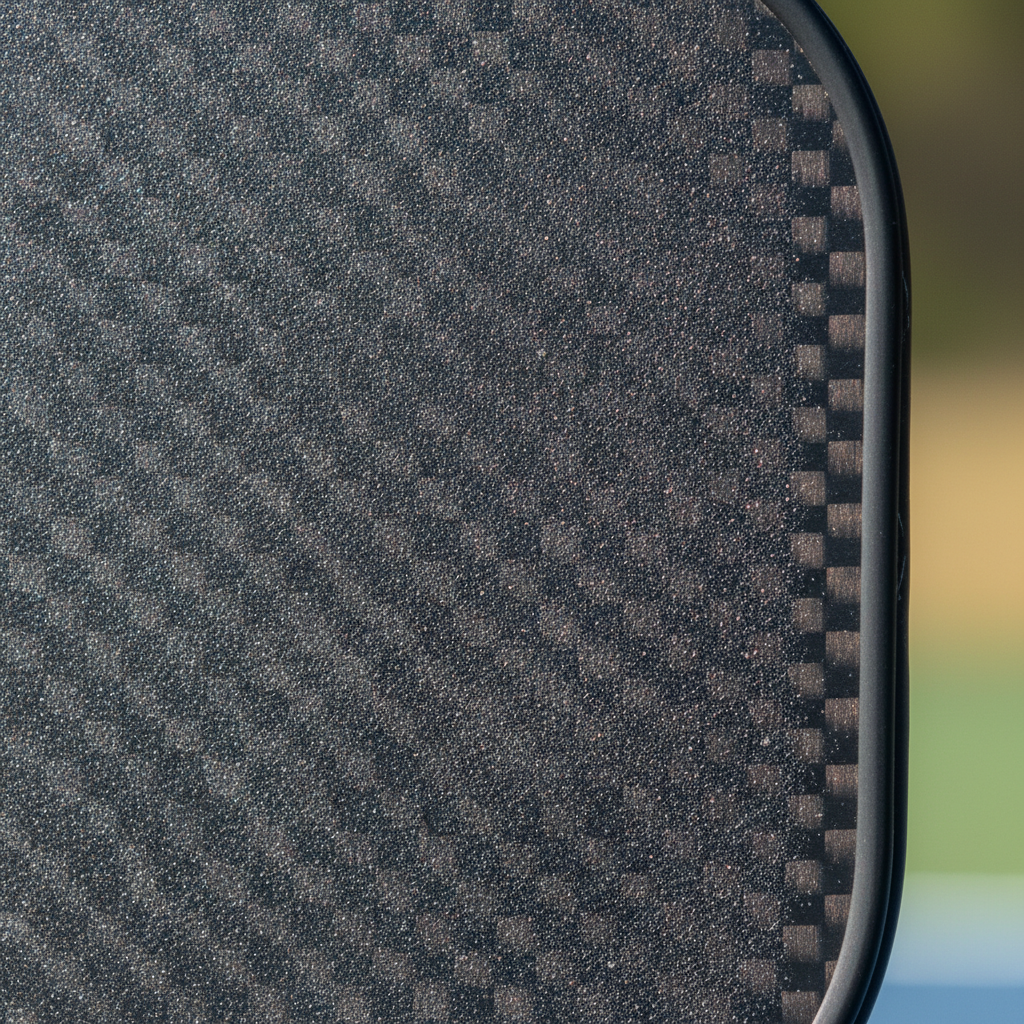
A thinner paddle can often generate more aggressive spin because its stiff core allows you to “brush” the ball with more speed and force. In the debate of 14 vs 16mm Pickleball Paddles, spin is a complex topic influenced by both the core and the surface texture. While a 16mm core allows the ball to “sink” into the face for better grip (dwell time), the 14mm core’s speed allows you to apply more rotation through a faster swing path. Many aggressive players prefer the 14mm for high-speed topspin drives that dip sharply into the court.
Does dwell time or swing speed matter more for spin?
Spin is created by the friction between the paddle face and the ball. Here is the real story: a 16mm core gives you more time to “grab” the ball, but a 14mm core gives you the speed to “rip” it.
- 16mm offers better control for “shaping” a slow dink.
- 14mm allows for massive rotation on hard-hitting serves.
- Stiffer cores prevent the ball from “sliding,” increasing friction.
- Faster head speed translates directly into more RPMs (rotations per minute).
How do surface materials interact with thickness?
The face material—like carbon fiber or fiberglass—works in tandem with the core to create spin. But wait, there’s more! A 14mm core with a high-grit surface is often considered the “ultimate spin machine” for power-heavy players.
- Carbon fiber provides the “bite” needed for heavy rotation.
- Fiberglass adds a spring-like effect that enhances spin on drives.
- Core stiffness ensures the energy of the “brush” isn’t lost.
- Advanced textures work best when backed by a solid, thin core.
Key Takeaway: 14mm paddles excel at high-speed spin for drives, while 16mm paddles offer better spin control for finesse shots.
| Spin Type | 14mm Core | 16mm Core |
|---|---|---|
| Topspin Drives | Maximum | Moderate |
| Slice Dinks | Good | Excellent |
| Serve Rotation | High | Stable |
| Finesse Spin | Moderate | High |
Mastering the art of spin requires a paddle that matches your swing speed, and for many, the 14mm core provides the perfect platform.
How do different materials impact core performance?
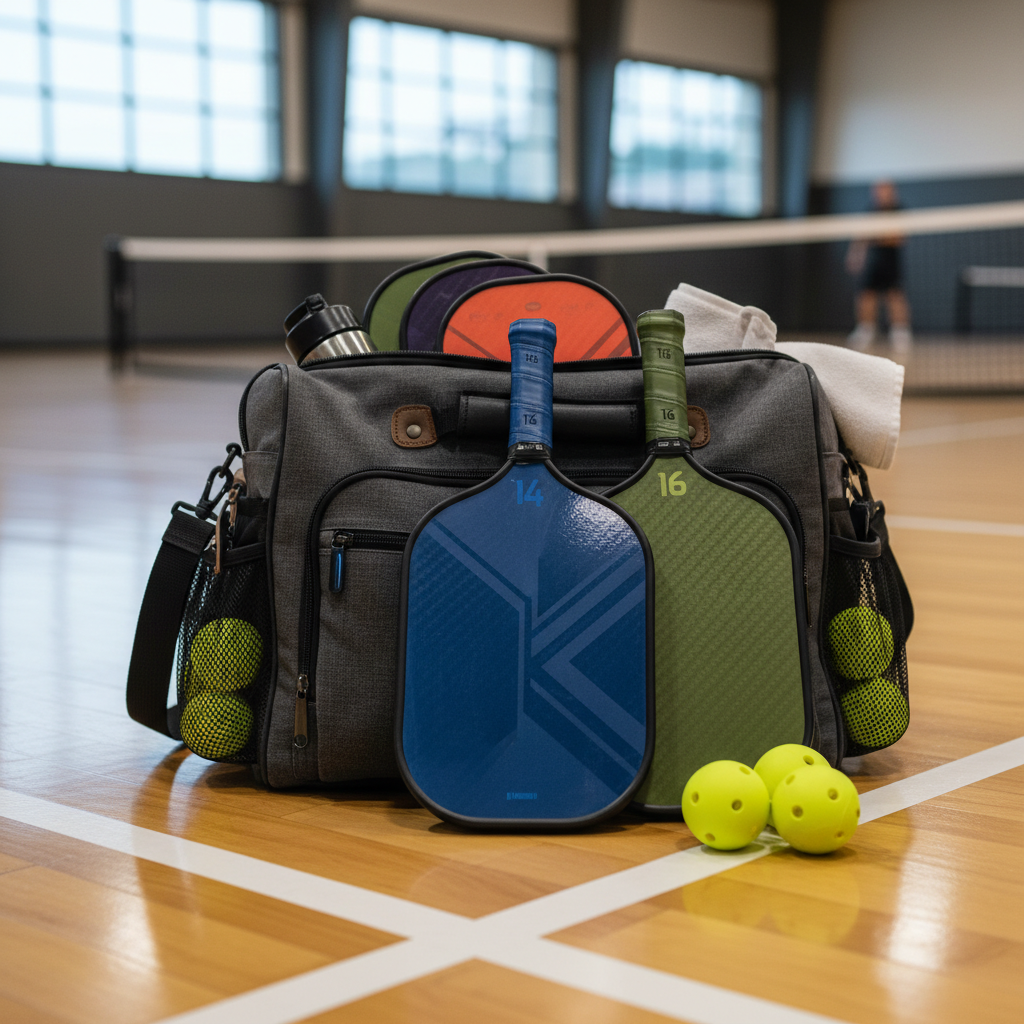
The materials used in conjunction with the core determine the final “feel” and performance of 14 vs 16mm Pickleball Paddles. While the thickness provides the foundation, the face material—such as carbon fiber, Kevlar, or fiberglass—adds the finishing touches to the power and control profile. For instance, a 16mm core with a carbon fiber face is the gold standard for control, whereas a 14mm core with a fiberglass face creates a high-powered “cannon.” Understanding how these elements harmonize will help you choose the perfect custom setup for your game.
What is the difference between carbon fiber and fiberglass faces?
The face is the “skin” of your paddle, and it dictates how the ball reacts on contact. Here is the kicker: carbon fiber is stiff and controlled, while fiberglass is flexible and powerful.
- Carbon fiber enhances the “muted” feel of a 16mm core.
- Fiberglass boosts the “pop” of a 14mm core.
- Advanced materials like Kevlar provide a middle ground for durability.
- The bond between the face and core affects the paddle’s longevity.
How does manufacturing technology change the core?
Modern paddles aren’t just glued together; they use advanced techniques to improve performance. Believe it or not, the way a paddle is pressed can change how a 14mm or 16mm core behaves on the court. You can see how premium builds improve these traits at https://bestpicklepaddle.com/cheap-pickleball-paddle-and-premium/.
- Thermoformed paddles offer more power and edge-to-edge stability.
- Cold-pressed paddles often provide a more traditional, soft feel.
- Foam-injected edges can make a 14mm paddle feel as stable as a 16mm.
- Core cell size can be “tuned” for specific sound and vibration levels.
Key Takeaway: The synergy between core thickness and face materials creates the specific “personality” of your paddle.
| Material Combo | Resulting Feel | Best For |
|---|---|---|
| 16mm + Carbon Fiber | Ultra Soft | Precise dinking & resets |
| 14mm + Carbon Fiber | Responsive Power | All-court aggressive play |
| 16mm + Fiberglass | Balanced Pop | Intermediate power |
| 14mm + Fiberglass | Maximum Power | Baseline bangers |
By choosing the right combination of core depth and surface material, you can build a tool that feels like a natural extension of your arm.
Does paddle thickness really matter for the average player?
Yes, paddle thickness matters immensely for the average player because it directly addresses the most common weaknesses in a recreational game: unforced errors and poor resets. When choosing between 14 vs 16mm Pickleball Paddles, the average player should prioritize consistency over highlight-reel power. A 16mm paddle acts as a coach in your hand, helping you keep the ball low and safe, which is the most effective way to win matches at the club level. While the 14mm paddle is tempting for its speed, it often requires a level of precision that most casual players haven’t yet mastered.
Can the right thickness improve your win rate?
Winning in pickleball is often a game of attrition—whoever makes the last mistake loses. Here is the deal: a thicker paddle reduces the number of mistakes you make by providing a more stable and forgiving surface.
- Fewer “pop-ups” mean fewer easy smashes for your opponents.
- Consistent serves and returns build a strong foundation.
- Better dinking keeps you in rallies longer.
- Confidence in your equipment leads to better overall strategy.
Should you ever switch from 16mm to 14mm?
As you improve, you might feel like you’ve “outgrown” the soft feel of a thicker paddle. Ready for the good part? Switching to a 14mm paddle can unlock a new level of aggression and speed once your fundamental control is solid.
- Advanced players use the 14mm to “punish” high balls.
- Increased swing speed helps in high-level doubles matches.
- The “pop” becomes a tactical weapon rather than a liability.
- It allows for more creative and aggressive shot-making.
Key Takeaway: Thickness is the most impactful gear choice you can make, with 16mm favoring consistency and 14mm favoring aggressive growth.
| Player Level | Recommended Path | Strategic Goal |
|---|---|---|
| Beginner | 16mm | Mastering the “soft game” |
| Intermediate | 16mm (Usually) | Reducing unforced errors |
| Advanced | Either | Tactical specialization |
Whether you are playing for fun or competing in a local tournament, the thickness of your core is the silent partner that determines your success on the court.
Frequently Asked Questions (FAQ)
How do I know if I need more power or more control?
If you frequently hit the ball into the net or struggle to reach the baseline with your drives, you need more power (14mm). If you frequently hit the ball out of bounds or pop dinks up too high, you need more control (16mm).
Can I add lead tape to a 14mm paddle to make it feel like a 16mm?
Lead tape can increase the weight and stability (twist weight) of a 14mm paddle, making it feel more solid. However, it will not change the fundamental “pop” or energy return of the thinner core.
Is there a significant weight difference between the two?
Typically, 14mm paddles are slightly lighter because they use less core material. However, many manufacturers balance this out with edge guards or internal weighting, so you should always check the static weight in ounces.
Which thickness is better for singles vs. doubles?
Many singles players prefer 14mm for the extra power and speed needed to cover the whole court. Doubles players often lean toward 16mm for the control and stability required during dink battles at the kitchen line.
Does the sound of the paddle change with thickness?
Yes, 16mm paddles generally have a deeper, more “thud-like” sound, which is often quieter. 14mm paddles tend to have a higher-pitched “clack” or “pop” sound due to the stiffer core response.
Conclusion
The journey to finding your perfect equipment ends with a choice that matches your unique style. We’ve explored how a 16mm core provides the “plush” stability needed for a defensive master, while a 14mm core offers the “explosive” speed for an aggressive attacker. Ultimately, your gear should give you the confidence to swing freely and enjoy every moment on the court. If you’re still unsure which path to take, don’t hesitate to contact us today for personalized advice. Choosing the right thickness is the first step toward your next victory—get out there and start playing