Complete guide to pickleball rules and terminology
Table of Contents
Mastering pickleball rules and terminology is the key to playing a fair and professional game on the court. Starting a pickleball club or retail shop is hard when your players and staff are confused by the game. If people do not understand the specific steps and words, it leads to messy matches and slow play. You might even lose customers because your facility feels unorganized to serious athletes. By learning the right pickleball rules and terminology, you can build a top-tier business where everyone knows how to win.
What are foundational pickleball rules and terminology?
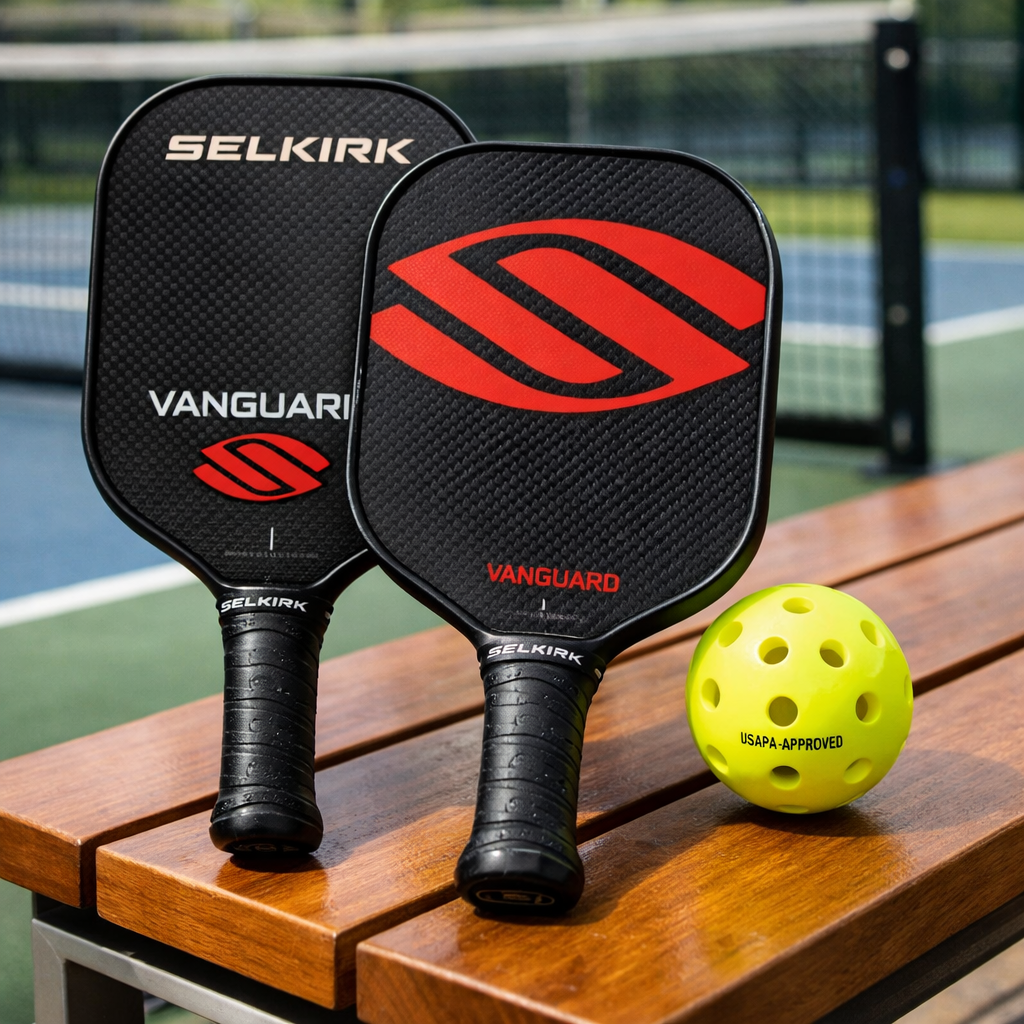
Foundational pickleball rules and terminology start with a standard 20 by 44 foot court and official gear. You must use a paddle that is safe and a ball with small holes for the game to count. This setup is the same for both solo play and team matches in professional settings. Starting with these basics ensures your club follows international standards for every game.
Primary Equipment Standards for You
The gear you choose must meet the official rules to be used in real tournaments. You need to provide paddles that have a smooth face and a solid core for the best performance.
- Use a court that is 20 feet wide and 44 feet long.
- Make sure your net is 36 inches high at the side lines.
- Set the net to 34 inches high in the center of the court.
- Only buy paddles that are within the official size limits.
Check this out: Using the right equipment makes you look like a pro and keeps the game safe. When you pick high-quality gear, your players will feel the difference in every shot they make.
Key Takeaway
| Equipment Item | Official Standard |
|---|---|
| Court Dimensions | 20 x 44 Feet |
| Net Height (Side) | 36 Inches |
| Ball Type | Plastic with Holes |
Having the right court size and gear is the first step to building a professional sports brand.
How do service pickleball rules and terminology work?
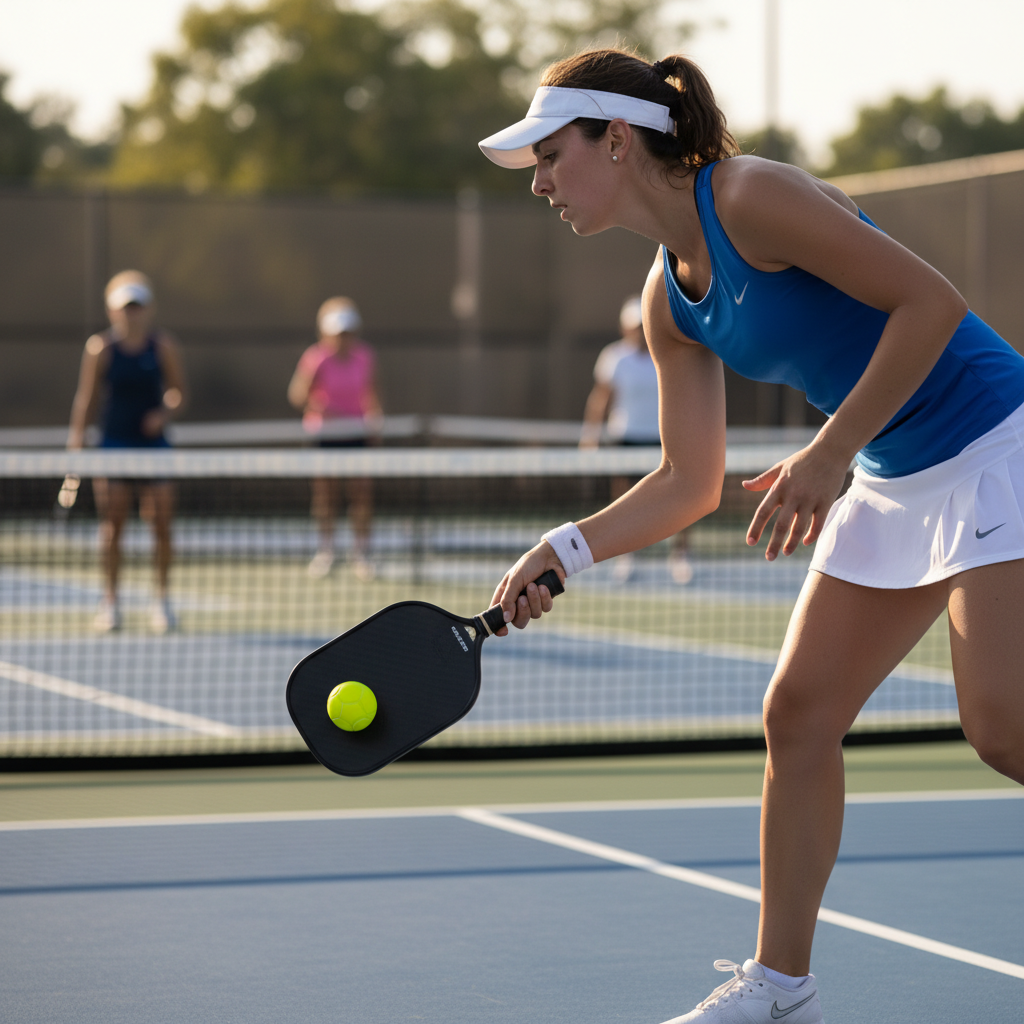
Serves in pickleball rules and terminology must be hit underhand and land in the diagonal box. You have to keep both of your feet behind the back line when you start the point. The ball must clear the kitchen area to be a legal hit. If you follow these steps, every match at your club will start in a fair and professional way.
Making a Legal Serve Every Time
A legal serve requires you to hit the ball while your paddle is moving in an upward path. You must hit the ball below your waist level to keep the game balanced for the receiver.
- Keep your feet behind the baseline until you hit the ball.
- Aim for the service box diagonal from where you stand.
- Make sure the ball does not touch the kitchen line.
- Hit the ball with an upward motion of your arm.
Think about it: The serve is only meant to start the point, not to score a point immediately. You will find that keeping the serve simple helps your players stay in the game longer.
Key Takeaway
| Service Rule | Requirement |
|---|---|
| Paddle Motion | Underhand/Upward |
| Foot Position | Behind Baseline |
| Target Zone | Diagonal Box |
A correct serve ensures that matches move smoothly and players follow the official competitive flow.
Why is the double bounce pickleball rules and terminology used?
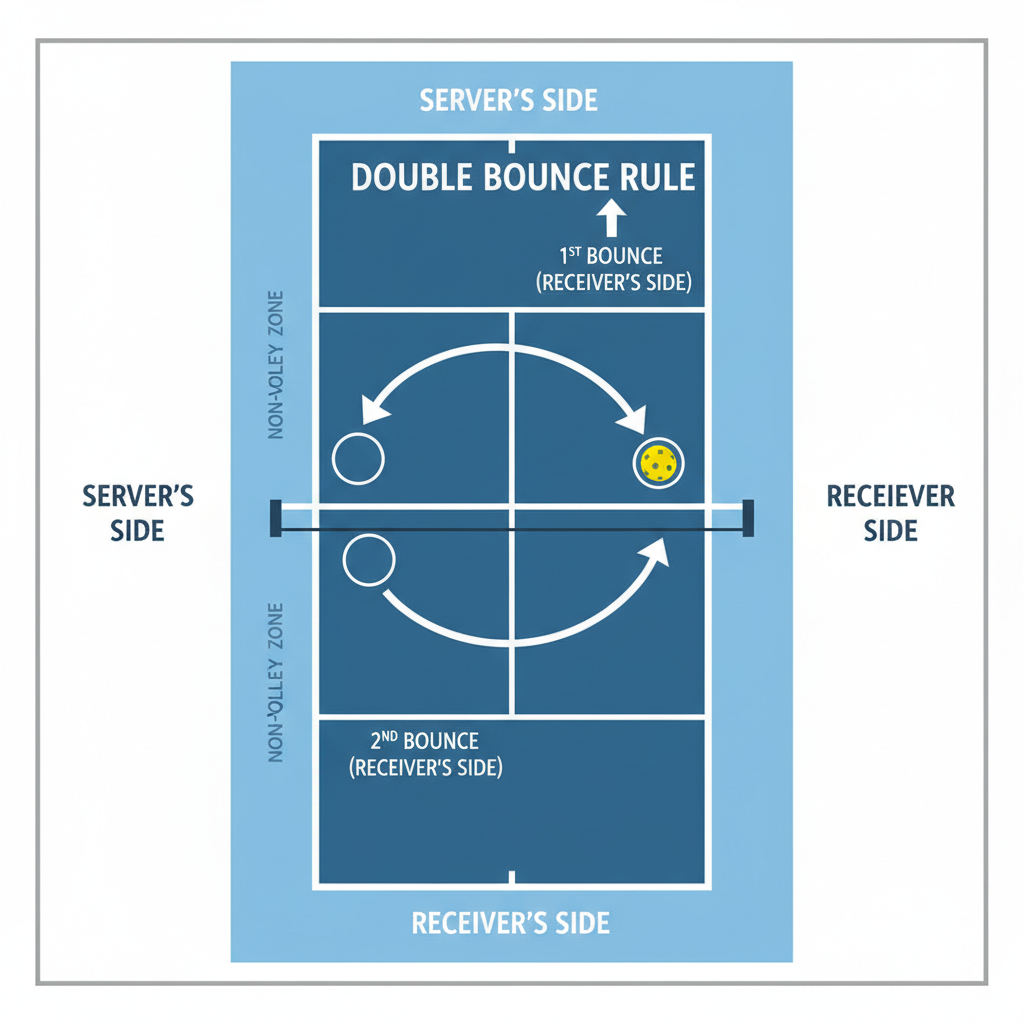
The double bounce rule is a part of pickleball rules and terminology that requires the ball to hit the ground twice. You have to let the serve bounce once, and then the server must let the return bounce once as well. This rule stops players from rushing the net too fast to end the point with a smash. It makes the game much more about skill and strategy for everyone involved.
The First Two Hits for You
You must watch the ball carefully during the first two hits of every single point. If you hit the ball in the air before the second bounce, your team will lose the point.
- The receiving team lets the serve bounce once.
- The serving team lets the return bounce once.
- After these two bounces, anyone can hit a volley.
- This rule applies to both singles and doubles matches.
Ready for the good part? This rule is the secret to why this sport has such long and fun rallies. It gives you a chance to set up your best shots instead of losing the point right away.
Key Takeaway
| Hit Sequence | Action Needed |
|---|---|
| Shot 1 (Serve) | Must Bounce |
| Shot 2 (Return) | Must Bounce |
| Shot 3 (Rally) | Volley Allowed |
The double bounce rule keeps the game fair and creates the long rallies that players love most.
How to master kitchen pickleball rules and terminology?
You master the kitchen in pickleball rules and terminology by staying out of the zone during volleys. This seven-foot area near the net is a place where you cannot hit the ball while it is in the air. You can step inside if the ball bounces first, but you must move back out to hit a volley. This keeps the game safe and prevents players from standing too close to the net.
Playing Near the Non-Volley Zone
You must keep your feet completely behind the kitchen line when you want to smash the ball. Even if your momentum carries you onto the line after the hit, it is still a mistake.
- Never step on the line while hitting a volley.
- Step into the kitchen only if the ball hits the ground.
- Move both feet back out before you hit your next volley.
- Use soft shots called “dinks” when playing near this line.
Here’s the deal: Most professional points are won or lost right at this seven-foot line. You will see that staying calm and patient in the kitchen is how you win more matches.
Key Takeaway
| Kitchen Action | Is It Legal? |
|---|---|
| Volley from Inside | No |
| Standing Inside | Yes |
| Hitting a Bounce | Yes |
Respecting the kitchen line ensures high-level play and follows the most important safety rules of the sport.
What are the fault pickleball rules and terminology to avoid?
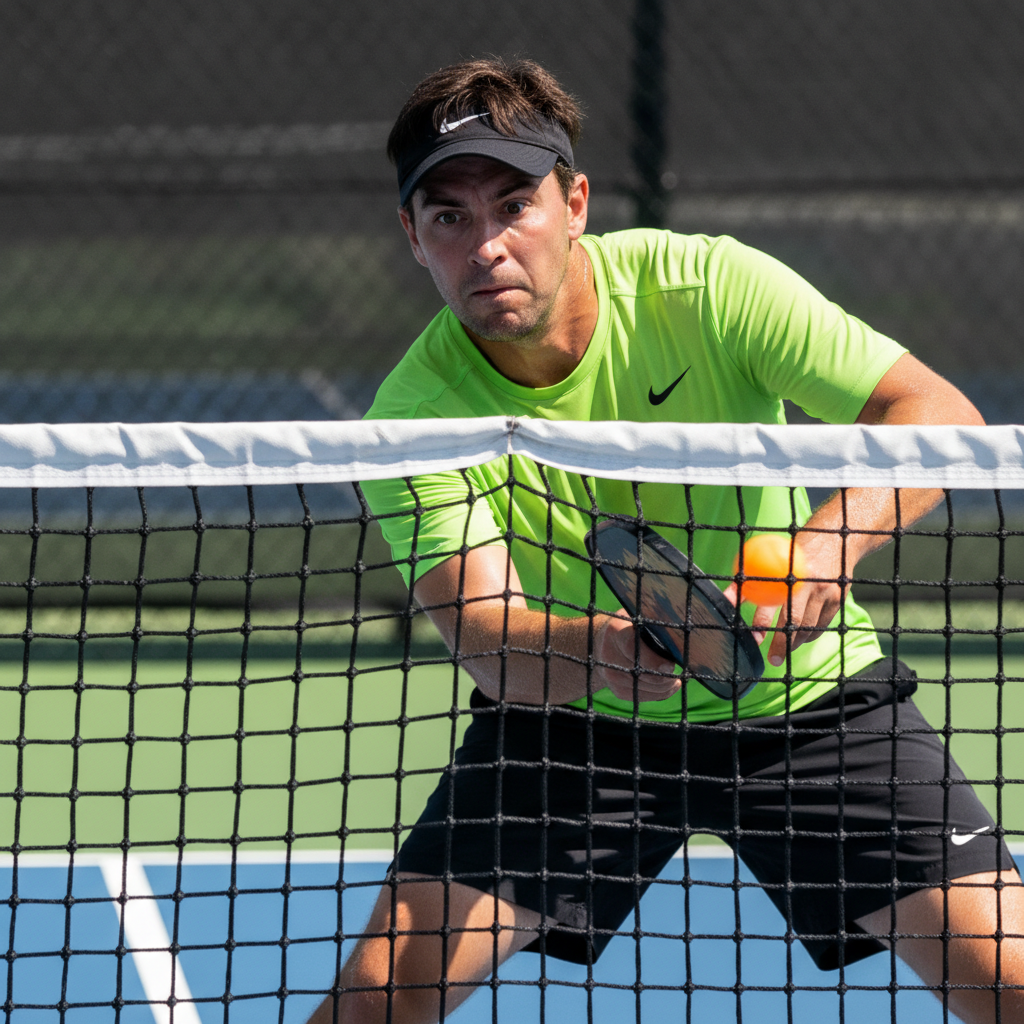
Faults are errors in pickleball rules and terminology that cause a team to lose a point or the serve. You commit a fault if you hit the ball out of bounds or if the ball hits the net. Knowing these mistakes helps your staff judge games better and keeps the matches very professional. Avoiding these common errors is the fastest way for your players to get better at the game.
Technical Errors for You to Watch
You must stay focused to avoid small mistakes that can end a point before it really starts. Even touching the net with your paddle or your shirt is a fault that ends the rally.
- Do not hit the ball into the net.
- Avoid landing the ball outside the white sidelines.
- Never let the ball hit your body or clothes.
- Follow the bounce rules to avoid a volley fault.
Look at the facts: Small mistakes are often the difference between winning and losing in a close tournament. You should train your staff to spot these faults quickly to keep games moving fast.
Key Takeaway
| Fault Type | Result |
|---|---|
| Out of Bounds | Loss of Point |
| Net Touch | Immediate Fault |
| Bounce Error | End of Rally |
Avoiding faults shows that you are a serious player and keeps the competition fair for every person.
How to track scoring pickleball rules and terminology?
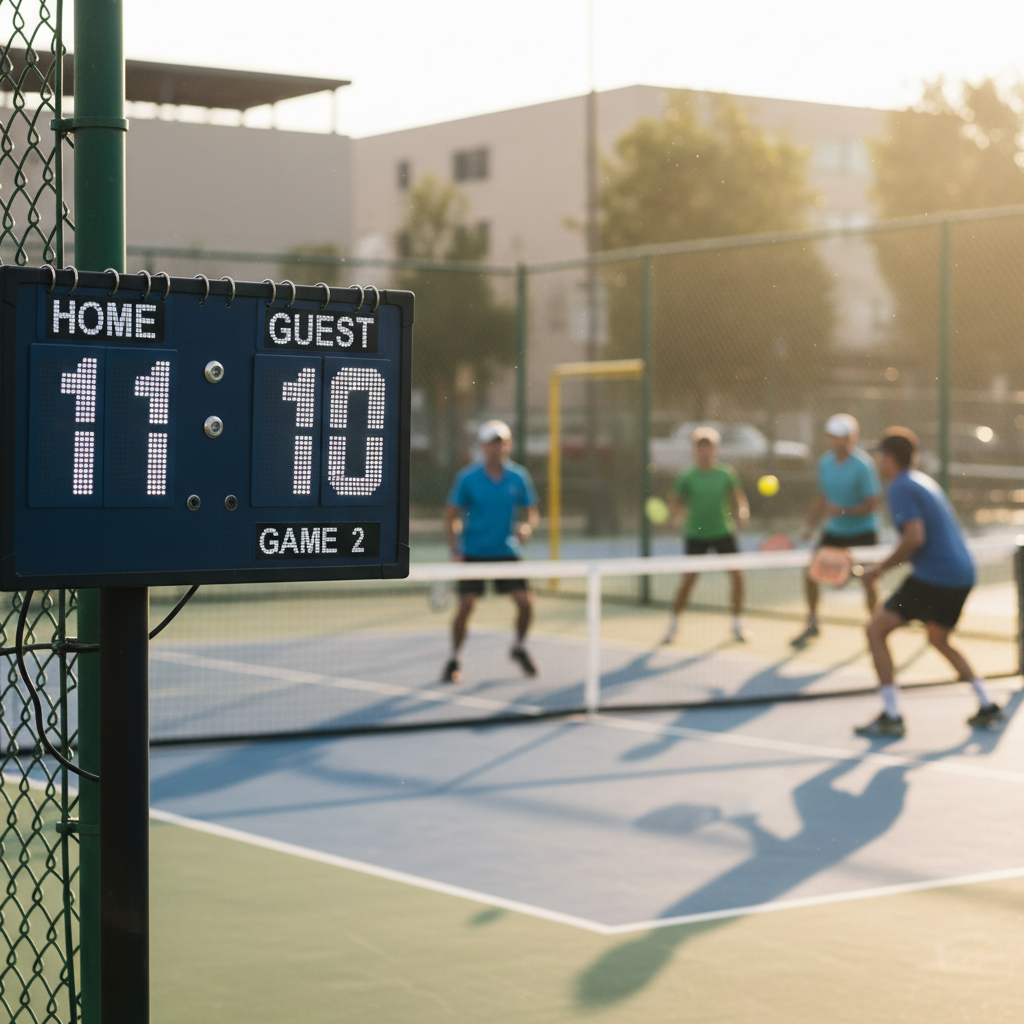
Tracking the score in pickleball rules and terminology requires you to use three different numbers. These numbers tell you the server’s score, the receiver’s score, and which partner is serving the ball. You only earn points when your team is the one serving to the other side of the net. This system ensures that the lead can change quickly, making the game very exciting.
Calling the Score in Doubles
You must call out the score before every serve so that everyone on the court knows the status. A score like 4-2-1 means your team has 4 points, they have 2, and the first partner is serving.
- Games are usually played until one team gets 11 points.
- You must win by at least 2 points to end the game.
- The third number is always a 1 or a 2 in team play.
- Only the serving team can add to their score.
Believe it or not: Calling the score out loud helps stop arguments before they even start. You will find that a loud and clear score keeps the match professional and fun for everyone.
Key Takeaway
| Score Position | What It Means |
|---|---|
| First Number | Serving Team Score |
| Second Number | Receiving Team Score |
| Third Number | Server Number (1 or 2) |
Learning the three-number score helps you manage matches with confidence and keeps your players happy.
What is advanced technical pickleball rules and terminology?
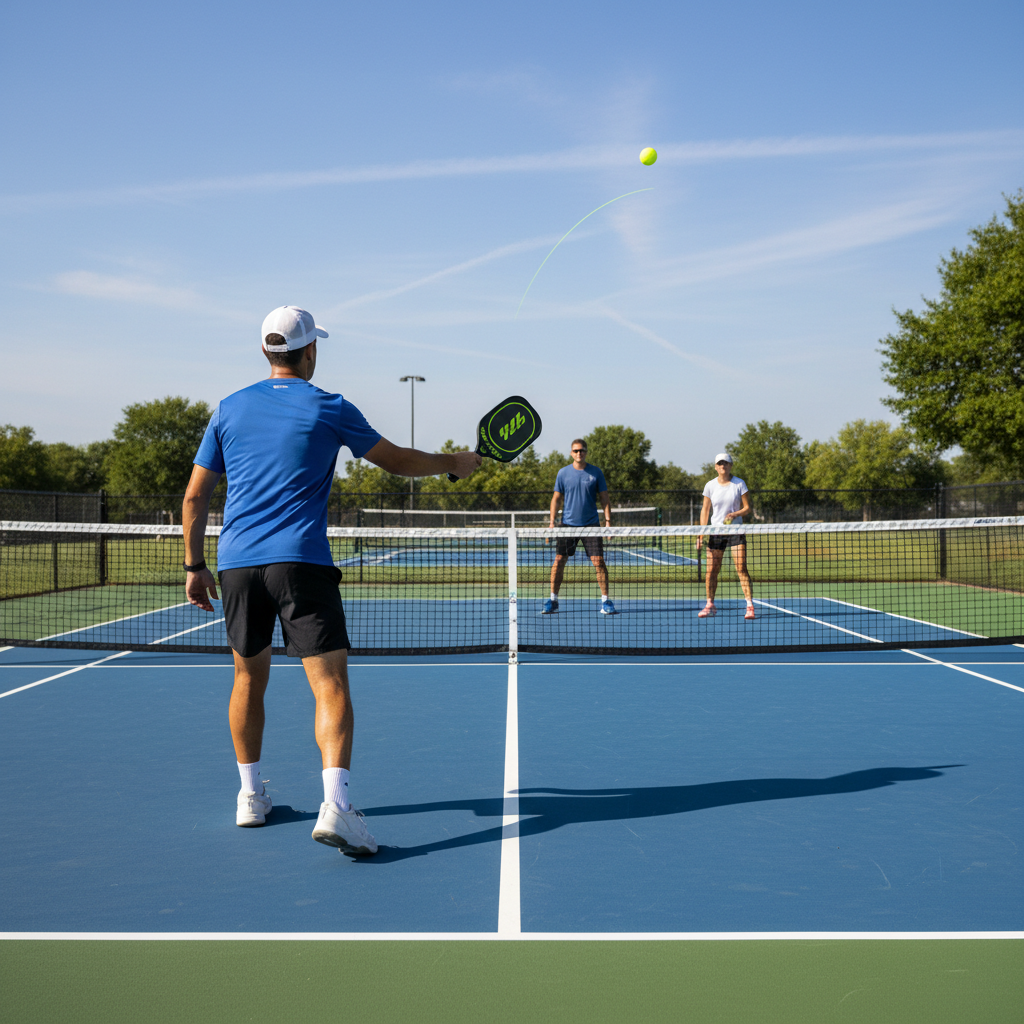
Advanced technical pickleball rules and terminology describe the special shots used by the best players in the world. You might hear words like “dink” or “third shot drop” when watching a high-level game at your club. Learning these terms helps you teach your members how to play a much smarter and more strategic game. These techniques allow players to control the match without having to hit the ball too hard.
Glossary of Winning Technique Shots for You
You should learn these special names so you can follow what happens in professional tournaments. Using these words in your club will make you sound like a true expert in the sport.
- The “Dink”: A soft shot that lands in the opponent’s kitchen.
- “Third Shot Drop”: A soft hit that lets you move to the net.
- “Lob”: A high shot that goes over the other player’s head.
- “Poach”: When you step in to hit a ball meant for your partner.
Ready for the good part? Mastering the “third shot drop” is what separates new players from real experts. It allows you to take control of the kitchen line where most points are won.
Key Takeaway
| Shot Name | Strategy Goal |
|---|---|
| Dink | Forces an error |
| Drop Shot | Safely move forward |
| Lob | Reset the point |
Using advanced terms and shots helps your players reach a professional level and win more matches.
How do paddle materials fit into pickleball rules and terminology?
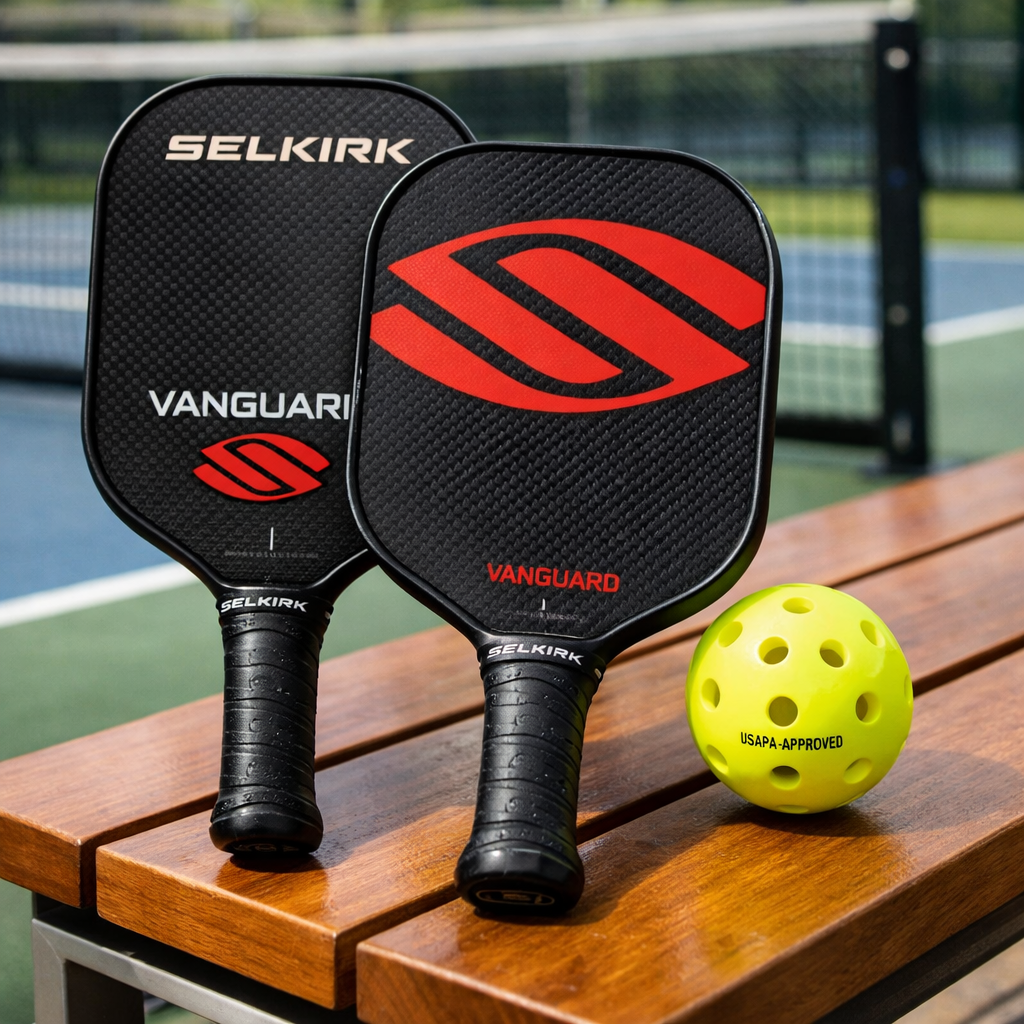
Paddle materials are a key part of pickleball rules and terminology because they change how the game feels. You must choose between materials like carbon fiber for control or glass fiber for more power in your hits. The rules state that paddles must not have a texture that is too rough or gives too much spin. Understanding these materials helps you sell the best gear to your facility members.
Science Behind Carbon and Glass Fiber for You
You need to know which material fits the style of your players so you can give them the best advice. Different cores, like polymer or Nomex, also change the sound and the bounce of the ball.
- Carbon fiber faces give you the best control for dinks.
- Glass fiber faces help you hit the ball with more speed.
- Polymer cores are quiet and very popular in local clubs.
- Nomex cores are loud and offer a lot of “pop” for power.
Think about it: The right paddle material can stop your arm from getting tired during a long day of play. You will see that players who have the right gear enjoy the sport much more.
Key Takeaway
| Material | Best For |
|---|---|
| Carbon Fiber | Spin and Control |
| Glass Fiber | Power and Speed |
| Polymer Core | Quiet and Soft Feel |
Choosing the right materials ensures your equipment follows the rules while giving players the best experience.
Why is court position part of pickleball rules and terminology?
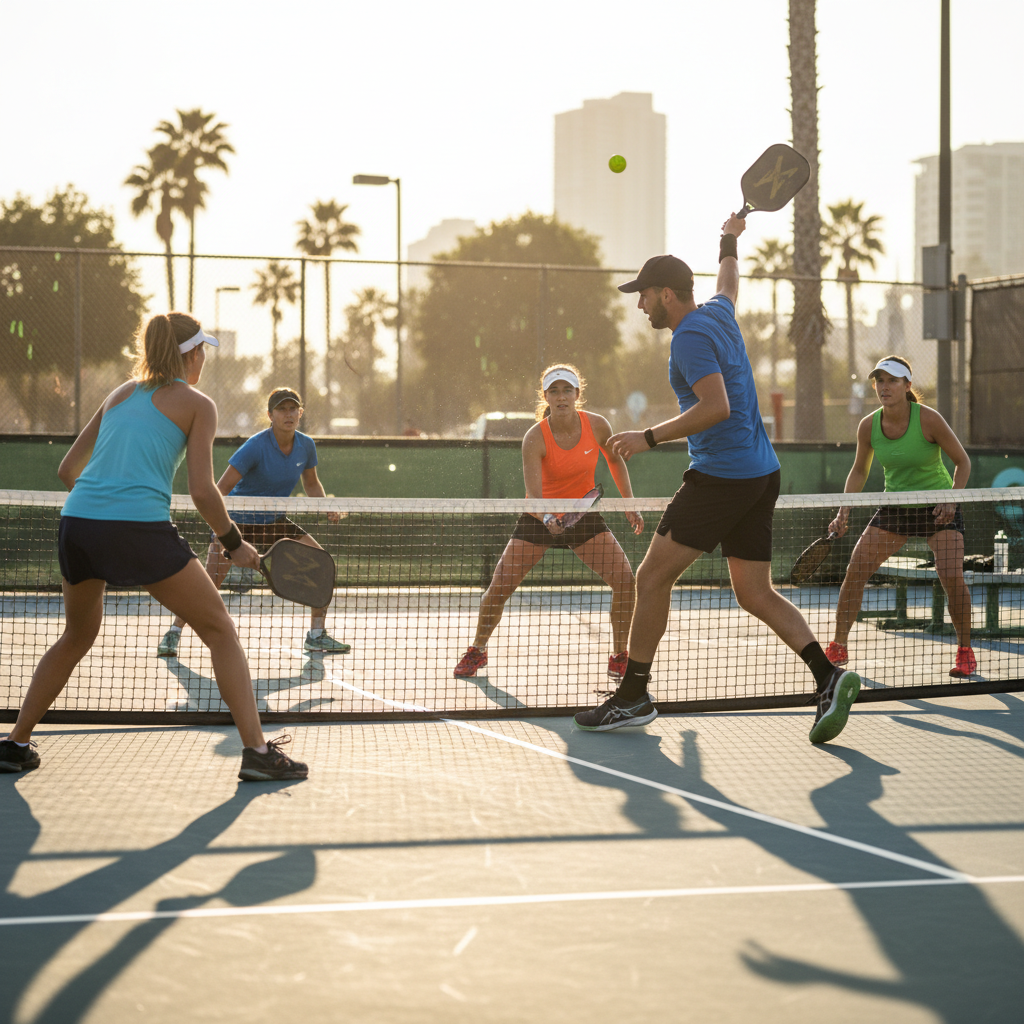
Court position is a vital part of pickleball rules and terminology that helps you defend your side effectively. You must move with your partner to cover the middle of the court and stay out of dangerous areas. Standing in the wrong place makes it easy for the other team to score points on you. Learning these positions is the best way for you to stay safe and win more rallies.
Finding the Best Spot for You
You should aim to get to the kitchen line as fast as possible after the first two bounces of the point. Standing in the middle area, called “No Man’s Land,” is the most common mistake for new players.
- Stay back near the line for the first two hits.
- Rush to the net once the double bounce is done.
- Move with your partner like you are joined by a rope.
- Keep your paddle up and ready at all times.
Check this out: The team that reaches the kitchen line first is usually the team that wins the point. You should teach your players to move together to close any gaps in their defense.
Key Takeaway
| Zone | Safety Rating |
|---|---|
| Kitchen Line | Very Safe / Strong |
| Baseline | Defensive / Good |
| Middle Court | Dangerous / Weak |
Correct positioning keeps your defense strong and helps you control the pace of every single match.
How can brands use pickleball rules and terminology to grow?

Brands use pickleball rules and terminology to build trust and show they are experts in the sport. You can grow your business by teaching these rules to new members and offering the right equipment for their needs. This makes your club a destination for people who want to learn the game the professional way. Using the right terms in your shop helps you connect with serious athletes and grow your sales.
Training Staff for Better Business for You
You must ensure that every person working at your club knows the official rules by heart. This allows them to answer questions quickly and help players choose the best paddles for their style.
- Host “Rule Clinics” to teach new members the basics.
- Use clear signs to explain the kitchen and scoring rules.
- Offer gear rentals that meet the highest professional standards.
- Write guides that help players understand advanced techniques.
Wait, there’s more: Brands that offer education have customers who are much more loyal to their business. You will find that sharing your knowledge is the best way to dominate the local market.
Key Takeaway
| Strategy | Business Benefit |
|---|---|
| Staff Training | Better Customer Service |
| Rule Clinics | Higher Member Loyalty |
| Expert Gear Advice | Increased Equipment Sales |
Using your expert knowledge of the rules is the ultimate way to build a successful and winning sports brand.
Frequently Asked Questions
Can I hit the ball before it bounces during a serve?
No, you must let the ball hit the ground once before you return it. The rules require a bounce on both sides at the start of every point.
What’s the best way to remember the non-volley zone rules?
Think of the kitchen as a place where your feet cannot be if you hit the ball in the air. You can only enter if the ball has already bounced on the floor.
How does a “Side Out” occur in a doubles match?
A side out happens when the serving team loses their turn to serve the ball. This occurs after both partners have finished their service turns.
Can I step into the kitchen after I hit a volley?
No, you cannot let your momentum carry you onto the line even after the hit is over. Touching the line at any time during a volley is a fault.
What is the most important term for a beginner to learn?
The “dink” is the most important term because it describes the soft shot that defines the game. It teaches you how to be patient and win with strategy.
Conclusion
Understanding the rules and the language of this sport is the best way to move from a beginner to a pro. This guide has shown you how the kitchen, the serve, and the scoring system work together to make the game fun. We solve your problems by giving you the technical knowledge and the high-end gear you need to succeed. Our vision is to help every club owner build a professional environment that players truly love. If you are ready to upgrade your facility, contact us today to find the perfect equipment for your business goals.