Pickleball Court Dimensions and Size: The Official Builder’s Guide
A standard pickleball court measures exactly 20 feet by 44 feet, which is the same size for both singles and doubles play. Have you ever tried to play a game only to find the lines are too close or the space feels tight? It is very frustrating to lose a point because the layout is wrong or you tripped over a fence that was too close. This guide on Pickleball Court Dimensions and Size will help you understand the rules so you can build or find the perfect place to play.
Table of Contents
What are the official dimensions of a regulation court?
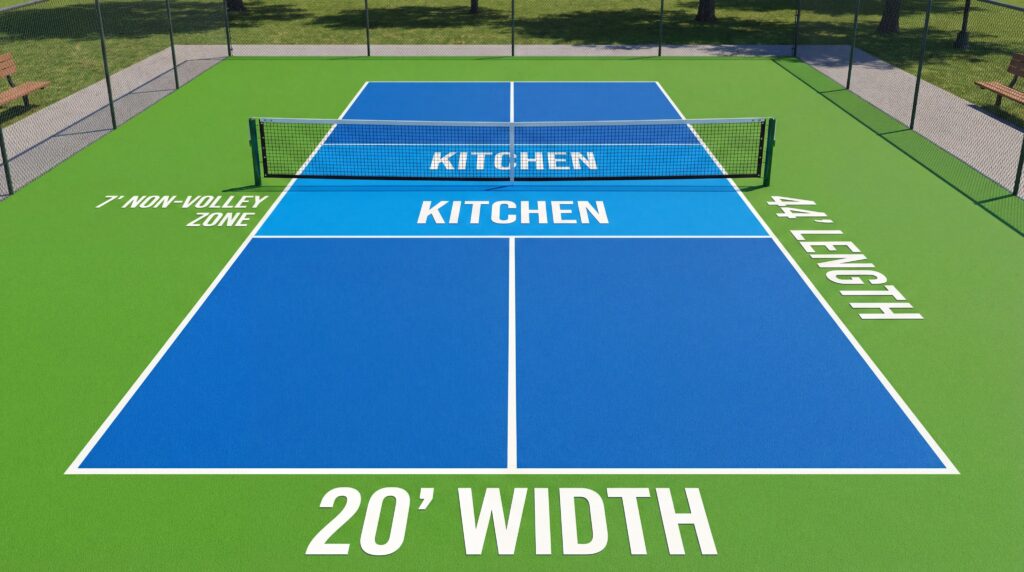
The official Pickleball Court Dimensions and Size require a playing area of 20 feet wide and 44 feet long. These measurements are the same whether you are playing with two people or four people. You must follow the pickleball rules to make sure your court is ready for a real tournament.
Understanding the Rectangle
Most players think the court is bigger than it really is. It is actually about the size of a doubles badminton court.
But here is the kicker:
- The 44-foot length is split into two halves.
- Each half-court is 22 feet long.
- All lines should be 2 inches wide for the best view.
Why Size Consistency Matters
When every court is the same size, you can play well anywhere you go. It helps you learn exactly how hard to hit the ball every time.
Think about it:
- You will always know where the baseline is.
- Your dinks will stay consistent across different facilities.
- You won’t have to guess if a ball is out.
| Court Feature | Measurement |
|---|---|
| Total Width | 20 Feet |
| Total Length | 44 Feet |
| Half-Court Length | 22 Feet |
| Line Width | 2 Inches |
This data shows that the court is small and easy to fit in many places.
Key Takeaway: A 20′ x 44′ rectangle is the foundation for every official game.
How high should the net be set?
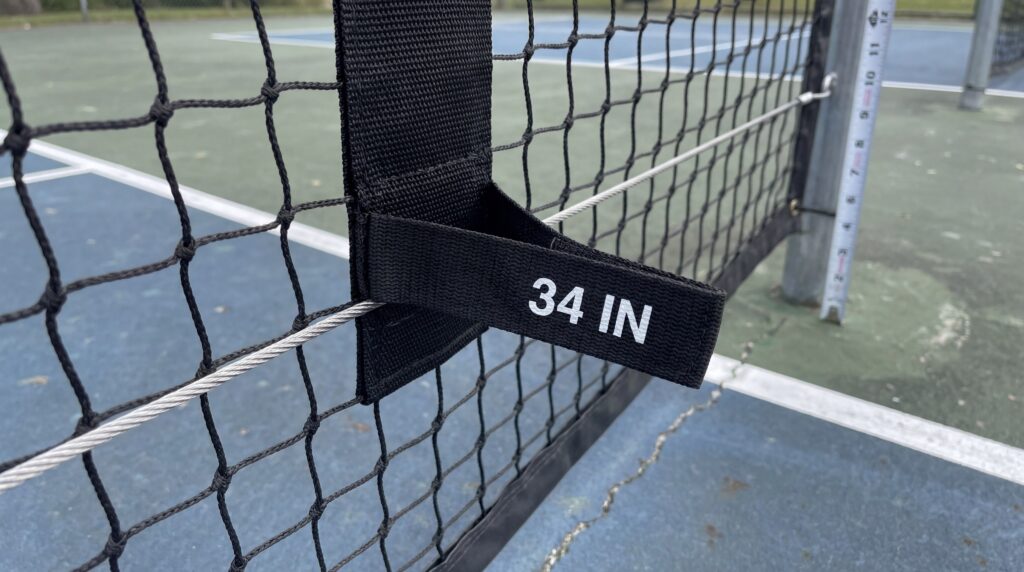
The net height for the correct Pickleball Court Dimensions and Size must be 36 inches at the posts and 34 inches in the center. This slight dip in the middle is very important for the way the ball bounces over. If the net is too high or too low, the game will not feel right.
The Importance of the Center Dip
The center of the net is the lowest point on the court. This makes it easier to hit a ball over the middle than over the sides.
Believe it or not:
- A center strap is used to hold the net down.
- You should check the height before every big match.
- Even one inch off can change your whole game.
Setting Up the Net Posts
The posts that hold the net should be placed outside the court lines. They are usually 22 feet apart to give the net enough room to stretch.
Keep this in mind:
- Posts should be strong enough to handle wind.
- They must be set deep into the ground for permanent courts.
- Tension helps keep the top of the net straight.
| Net Area | Required Height |
|---|---|
| At the Sidelines | 36 Inches |
| At the Center | 34 Inches |
| Post Distance | 22 Feet |
| Tape Width | 2 Inches |
This table confirms that the net must have a specific curve to meet standards.
Key Takeaway: Use a center strap to ensure your net hits the 34-inch mark perfectly.
What are the measurements for the kitchen area?
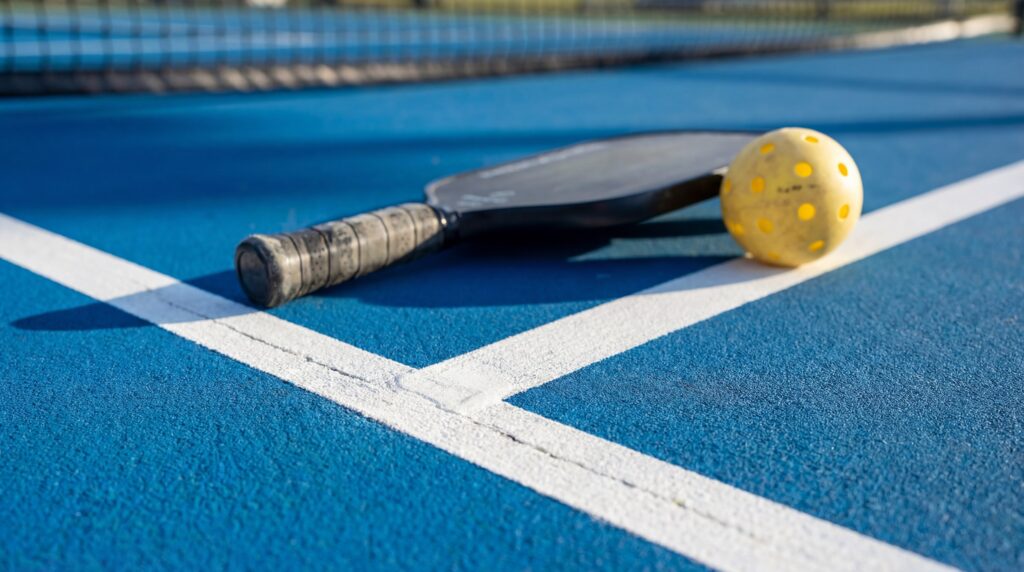
The non-volley zone, known as the kitchen, must be 7 feet deep on both sides of the net to meet Pickleball Court Dimensions and Size standards. This area keeps players from standing too close to the net and smashing the ball. Using the best pickleball paddles will help you control your shots while standing just outside this line.
Rules of the Kitchen Line
You cannot step on the kitchen line while you are hitting a volley. If your foot even touches the paint, you lose the point.
But here is the deal:
- The zone is exactly 7 feet from the net.
- It spans the full 20-foot width of the court.
- You can step inside only if the ball bounces first.
Why the 7-Foot Distance Matters
This distance creates a “soft” game where players must hit short, careful shots. It prevents the game from being just about power and hitting hard.
Think about it:
- It makes the game fair for all ages.
- It rewards players who have good touch.
- Without the kitchen, the net game would be too fast.
| Kitchen Detail | Measurement |
|---|---|
| Depth from Net | 7 Feet |
| Width of Zone | 20 Feet |
| Total Area | 140 Sq. Feet |
| Line Position | Behind the Net |
The measurements show that the kitchen is a large part of your total playing space.
Key Takeaway: The 7-foot kitchen line is the most important boundary for strategic play.
How much total space is needed for a facility?
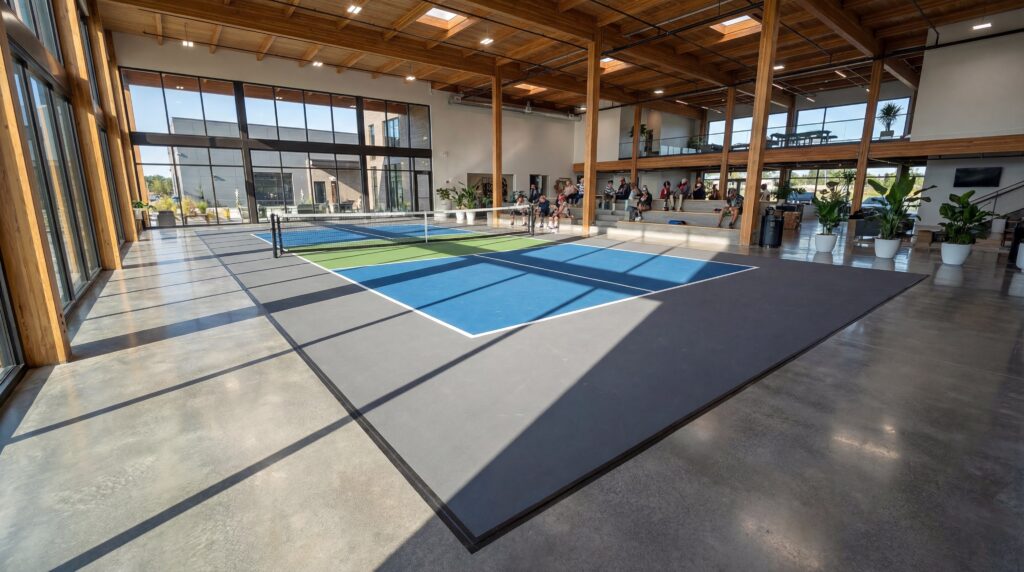
To build a safe facility, you need a total footprint larger than the Pickleball Court Dimensions and Size of the playing lines. The minimum recommended space for one court is 30 feet wide by 60 feet long. This extra room gives players a safe place to run without hitting walls or fences.
Planning the Run-off Space
Run-off space is the area outside the white lines where players move during a fast point. You need at least 8 to 10 feet behind the baselines.
Here is the kicker:
- Pro players move very fast and need more room.
- Sideline space should be at least 5 feet.
- Cramped spaces cause many unnecessary injuries.
Building Multiple Courts
If you are building more than one court, you should leave 10 feet between the courts. This prevents balls from flying into other games and stopping play.
You better believe it:
- Fences help keep balls in your own area.
- Walkways between courts keep everyone safe.
- More space makes the facility feel more professional.
| Space Type | Minimum Feet | Preferred Feet |
|---|---|---|
| Total Width | 30 Feet | 34 Feet |
| Total Length | 60 Feet | 64 Feet |
| End Clearance | 8 Feet | 10 Feet |
| Side Clearance | 5 Feet | 7 Feet |
This layout shows that a larger footprint is always better for player comfort and safety.
Key Takeaway: Always aim for a 34′ x 64′ area to give players the best experience.
Can you turn a tennis court into a pickleball area?
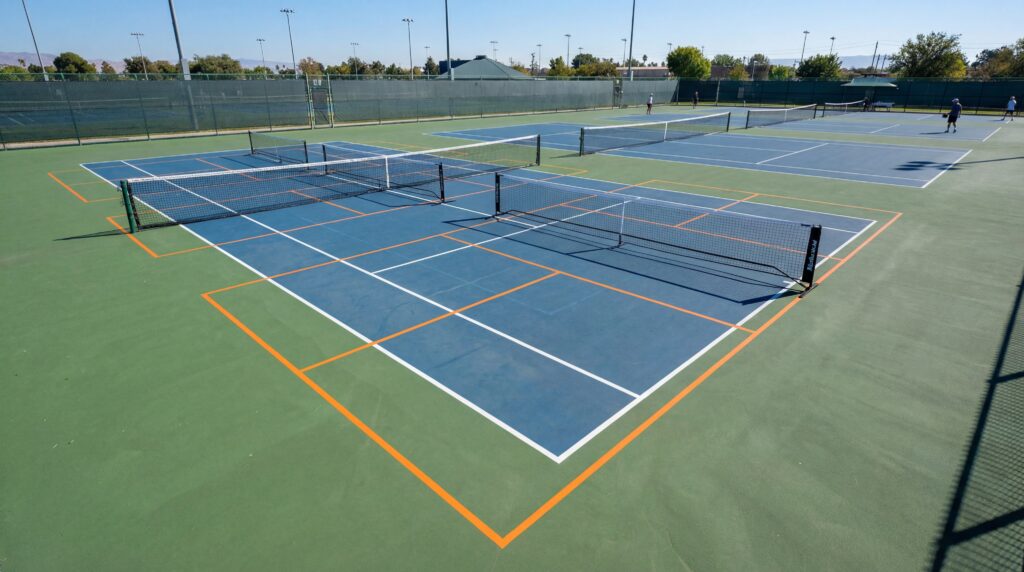
Yes, you can fit four Pickleball Court Dimensions and Size units inside the space of one standard tennis court. This is a great way to save money and use existing space for more people. Many clubs use a thermoformed-paddle to test out these new converted courts.
Fitting Four Courts Together
One tennis court is usually 60 feet by 120 feet. This is plenty of room to lay out four smaller courts side-by-side.
Think about this:
- You will need to use portable net systems.
- You can use different colored tape for the lines.
- It allows 16 people to play at the same time.
Shared Line Challenges
Sometimes you might want to keep the tennis lines and just add pickleball lines on top. You should use a very bright color for the new lines so players don’t get confused.
But here is the catch:
- Too many lines can be hard on the eyes.
- Use colors that stand out from the green or blue floor.
- Make sure the kitchen lines are very clear.
| Conversion Goal | Tennis Space | Pickleball Space |
|---|---|---|
| Total Units | 1 Court | 4 Courts |
| Max Players | 4 People | 16 People |
| Usage Efficiency | Low | Very High |
| Equipment | Fixed Net | Portable Nets |
The numbers show that converting courts is the best way to handle a crowd.
Key Takeaway: You can quadruple your player capacity by converting old tennis courts.
What are the rules for line markings?
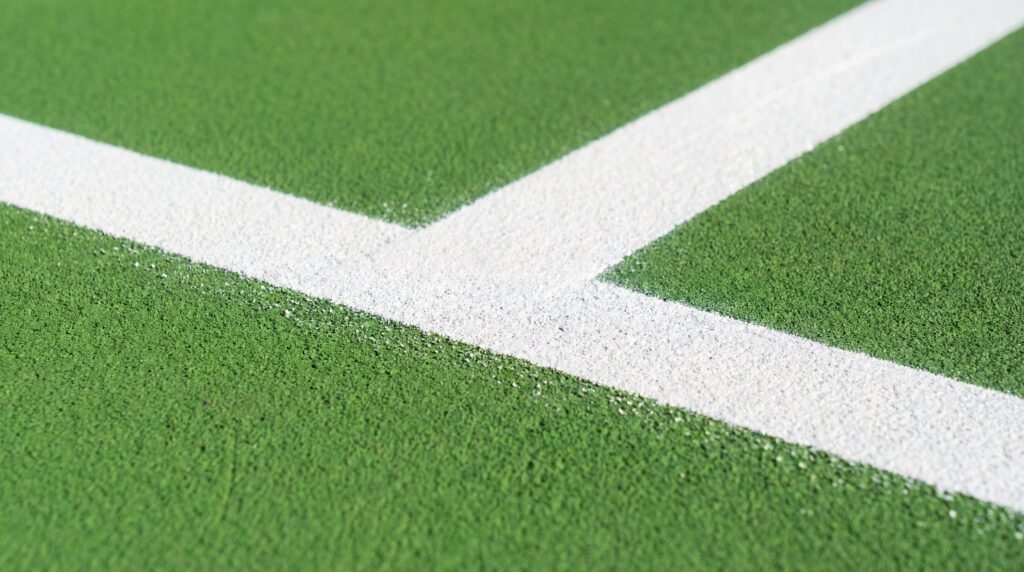
Standard line markings for the Pickleball Court Dimensions and Size must be 2 inches wide and done in a contrasting color. If the lines are the same color as the floor, you will never know if the ball was in or out. All measurements are taken from the outside of the lines to keep everything fair.
Marking the Boundaries
The boundaries include the sidelines and baselines that form the outer box. These lines tell you if the ball is in play or out of bounds.
You need to know:
- A ball touching the line is always considered “in.”
- Use high-quality paint that won’t fade in the sun.
- Non-slip paint is best to prevent sliding.
The Center and Kitchen Lines
The centerline divides the service boxes, and the kitchen line marks the non-volley zone. These lines must be measured perfectly from the center of the net.
Think about it:
- The centerline is 15 feet long on each side.
- It stops exactly at the kitchen line.
- Symmetry is key for a fair game.
| Line Type | Width | Importance |
|---|---|---|
| Baseline | 2 Inches | Bounds Check |
| Sideline | 2 Inches | Bounds Check |
| Centerline | 2 Inches | Service Zone |
| Kitchen Line | 2 Inches | Volley Rule |
Consistent line width ensures that every court feels the same to the players.
Key Takeaway: Always use 2-inch wide lines and measure from the outside edges.
Which colors work best for court surfacing?
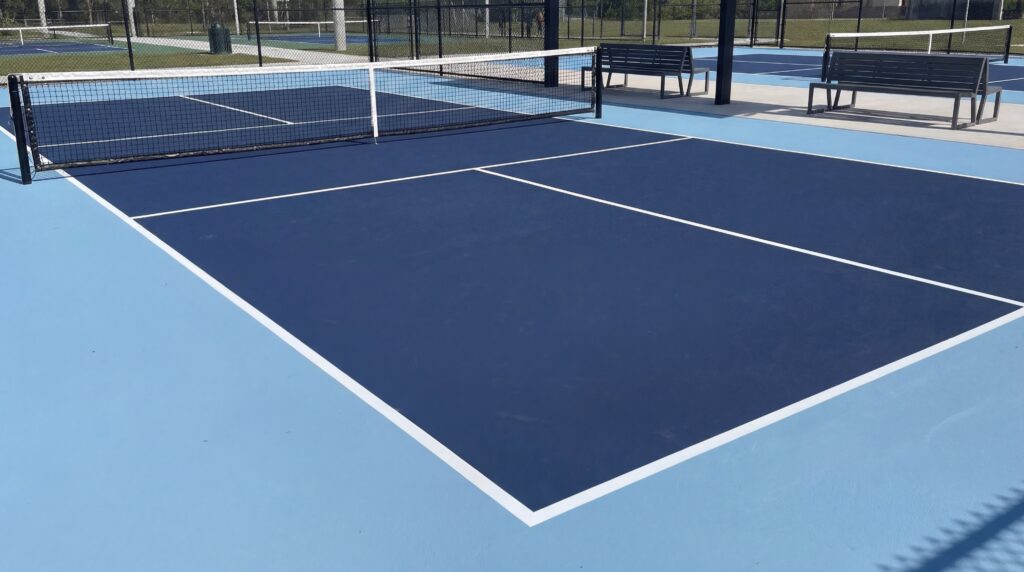
High-contrast colors like dark blue and light green are the best choices for Pickleball Court Dimensions and Size surfacing. Using two different colors helps players see the kitchen zone and the service boxes more easily. If you want a custom look, you can choose colors that match your club’s brand.
Visibility and Performance
The colors you choose can help you see the ball better while it is moving fast. Darker colors on the outside and lighter colors inside the court are very popular.
Believe it or not:
- Darker surfaces can get very hot in the summer.
- Light blue is easy on the eyes during long games.
- Textured paint helps the ball bounce correctly.
Aesthetic and Professional Feel
A court that looks good makes people want to play more. Many modern facilities use three colors to make the kitchen stand out even more.
The best part is:
- It makes your facility look professional.
- It helps new players learn the zones faster.
- It looks great in photos and videos.
| Zone | Popular Color | Reason |
|---|---|---|
| Kitchen | Light Green | High Visibility |
| Service Box | Dark Blue | Ball Contrast |
| Out of Bounds | Gray or Red | Defines Edge |
| Lines | White | Standard Look |
Color selection is about more than just looks; it improves how you play the game.
Key Takeaway: Use high-contrast colors to help players see the ball and the zones clearly.
Why is north-south orientation important?
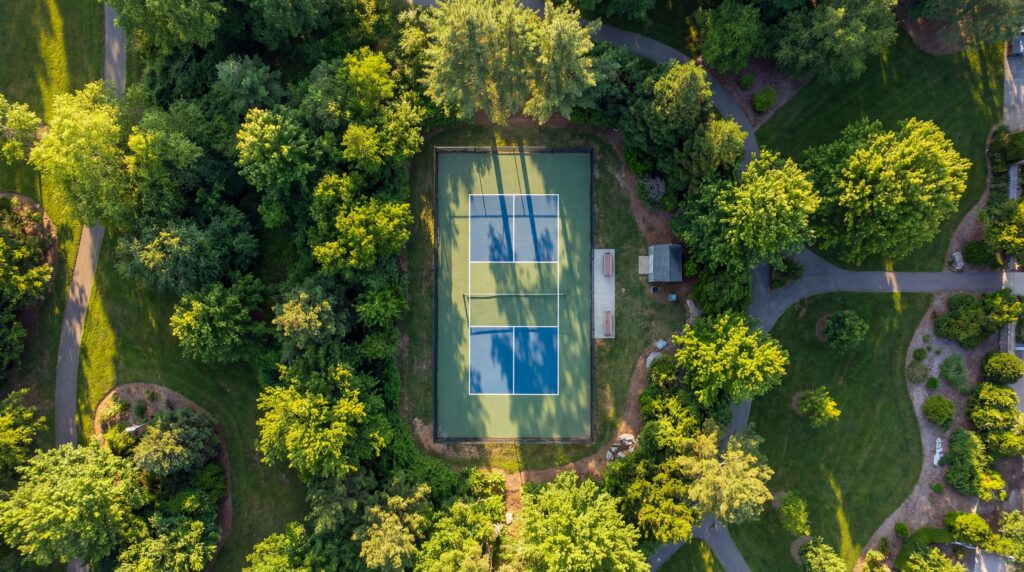
Outdoor Pickleball Court Dimensions and Size should always face north and south to keep the sun out of the players’ eyes. If you build a court facing east and west, one side will be blinded during the morning and the other in the evening. This makes the game unfair and very difficult to play at those times.
Managing Sun Glare
When the court runs north-south, the sun stays to the sides of the players. This means nobody has to stare directly at the sun while trying to hit a lob.
Think about this:
- It is much safer for your eyes.
- Matches can last longer into the afternoon.
- It makes the court usable for more hours each day.
Using Windscreens for Help
If you cannot face the court north-south, you might need to use windscreens on your fences. These can block some of the low sun and also keep the wind from moving the ball.
But here is the kicker:
- Windscreens also provide a solid background for the ball.
- They reduce distractions from outside the court.
- They help keep the court private.
| Orientation | Sun in Eyes | Playability |
|---|---|---|
| North-South | No | High |
| East-West | Yes | Low |
| Diagonal | Sometimes | Medium |
| Indoor | No | Perfect |
Correct geographic alignment is a free way to make your court much better.
Key Takeaway: Always orient your outdoor courts north-south for the best lighting conditions.
What lighting is needed for night play?
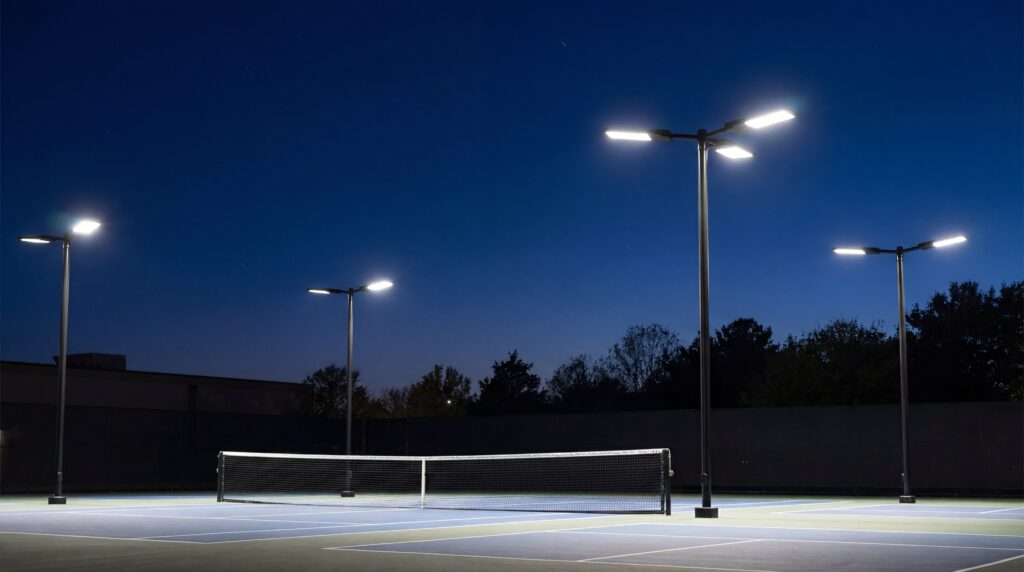
You need bright LED lights that cover the whole Pickleball Court Dimensions and Size without leaving dark spots. Good lighting lets you play long after the sun goes down, which is great for people who work during the day. Most pro facilities aim for 30 to 50 foot-candles of light across the entire surface.
Why LED is the Best Choice
LED lights are the top choice for modern courts because they are bright and save a lot of energy. They turn on instantly so you don’t have to wait for them to warm up.
Wait, there is more:
- They last for many years without needing new bulbs.
- They don’t get hot like older types of lights.
- The light is very white and clean for better vision.
Proper Pole Placement
Light poles should be placed on the sides of the court, not at the ends. Putting them at the ends can blind players when they look up to hit a lob.
Think about it:
- Poles should be about 18 to 20 feet high.
- Use at least four poles for even light.
- Avoid shadows in the kitchen zone.
| Light Quality | LED Standard | Benefit |
|---|---|---|
| Brightness | 30-50 FC | Clear View |
| Color Temp | 5000K | Daylight Feel |
| Energy Use | Low | Saves Money |
| Lifespan | 50,000 Hours | Low Maintenance |
Good lighting turns your court into a 24-hour facility for your community.
Key Takeaway: Use LED lights on the sides of the court to avoid glare and shadows.
Which net systems should you choose?
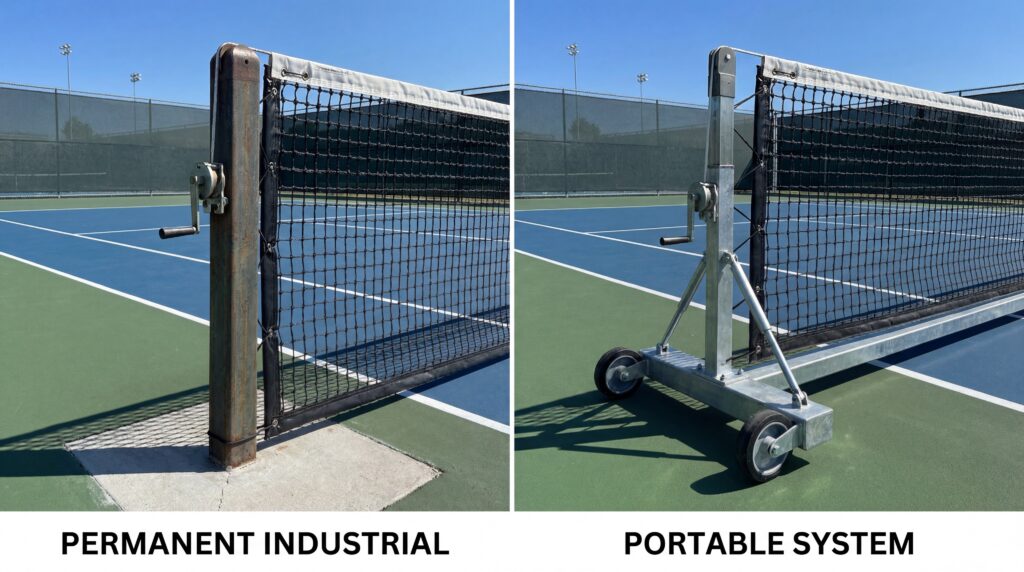
Choosing the right net system is vital for keeping the correct Pickleball Court Dimensions and Size and height during play. Permanent net systems are the strongest and best for dedicated courts. Portable net systems are great if you need to move the court or share the space with other sports.
Benefits of Permanent Posts
Permanent posts are set in concrete and can be pulled very tight. This ensures the net stays at exactly 34 inches in the center without sagging over time.
You need to know:
- They handle bad weather much better.
- They look more professional and official.
- They are very hard to damage.
When to Use Portable Nets
Portable nets are lightweight and can be set up in just a few minutes. They are perfect for playing in driveways or multi-use gym floors.
But here is the catch:
- They can blow over in strong wind.
- The height can change if you don’t check it often.
- They might not be as sturdy for pro-level play.
| Net Type | Durability | Portability |
|---|---|---|
| Permanent | High | None |
| Semi-Permanent | Medium | Low |
| Portable | Low | High |
| Competition | High | Medium |
Choosing the right net depends on how often and where you plan to play.
Key Takeaway: Permanent systems are best for quality, while portable systems are best for flexibility.
Summary and Brand Vision
Building a court with the right measurements is the first step toward a great game. We want to help you create a space that brings people together and promotes a healthy life. By following these rules, you ensure every player is safe and every match is fair. If you need more help with your project, contact us today to find the best gear for your new court.
Frequently Asked Questions
Can I play singles on a doubles court?
Absolutely. In pickleball, the court size is exactly the same for both singles and doubles, which makes it very simple to learn.
What is the “Kitchen” in pickleball?
The kitchen is the 7-foot area near the net where you are not allowed to hit a volley (a ball out of the air).
Can I use a tennis net for pickleball?
No. A tennis net is too high and too wide, so you must lower it or use a specific pickleball net to play correctly.
Do indoor courts have different sizes?
No. The official playing area is always 20 feet by 44 feet regardless of whether you are playing inside a gym or outside in a park.
What is the total space I need to build a court?
You should have a flat area of at least 30 feet by 60 feet, though 34 feet by 64 feet is much better for safety.