What is an Ernie in Pickleball?
Problem: You are locked in a long, repetitive dink rally at the kitchen line. No matter how softly you hit the ball, your opponent sends it right back. It feels like you are stuck in a loop with no way to end the point or catch them off guard.
Agitate: This “dink-fest” can be exhausting and predictable. If you try to speed up the ball from inside the kitchen, you risk hitting it into the net or giving them an easy high ball to smash. You need a secret weapon that breaks the rules of a standard dink exchange without actually breaking the laws of the game.
Solution: The answer is the Ernie. An Ernie is an advanced pickleball shot where you jump or step outside the court’s sideline to hit a volley mid-air, allowing you to strike the ball much closer to the net than usual. By moving to the out-of-bounds area, you bypass the non-volley zone (kitchen) restrictions. You can learn more about unique strategies like this at bestpicklepaddle.com.
Table of Contents
Where did the name Ernie come from?
Who is Erne Perry?
The shot is named after Erne Perry, a player who popularized the move in competitive play. While he might not have “invented” the physics of jumping over the corner, his frequent and successful use of it during the 2010 Nationals made it his signature move.
Why do people spell it “Ernie”?
Even though the player’s name is Erne, many in the community spell it “Ernie” because of the famous duo from Sesame Street. This is especially true since the partner move to this shot is called a “Bert.”
Key Takeaway
The Ernie is named after Erne Perry, who turned a niche movement into a legendary competitive tactic around 2010.
| Fact | Detail |
|---|---|
| Named After | Erne Perry |
| Popularized | Circa 2010 |
| Common Misspelling | Ernie |
Why is the Ernie shot so effective?
Listen closely: the Ernie is all about psychology.
The element of surprise
Most players focus entirely on what is happening within the court lines. When you suddenly vanish from their field of vision and reappear out of bounds to smash a volley, it creates instant panic and usually ends the rally.
Putting pressure on your opponents
Once you show your opponents you can hit an Ernie, they have to change how they dink. They will be too scared to hit the ball near the sideline, often forcing them to hit lower-quality shots toward the middle of the court.
Key Takeaway
The Ernie works because it uses the “invisible” space outside the court to catch opponents off guard and disrupt their dinking rhythm.
| Benefit | Impact on Game |
|---|---|
| Surprise | Catch opponents out of position |
| Psychology | Makes opponents afraid to dink wide |
| Aggression | Turns a defensive dink into an offensive kill |
Is the Ernie shot legal in pickleball?
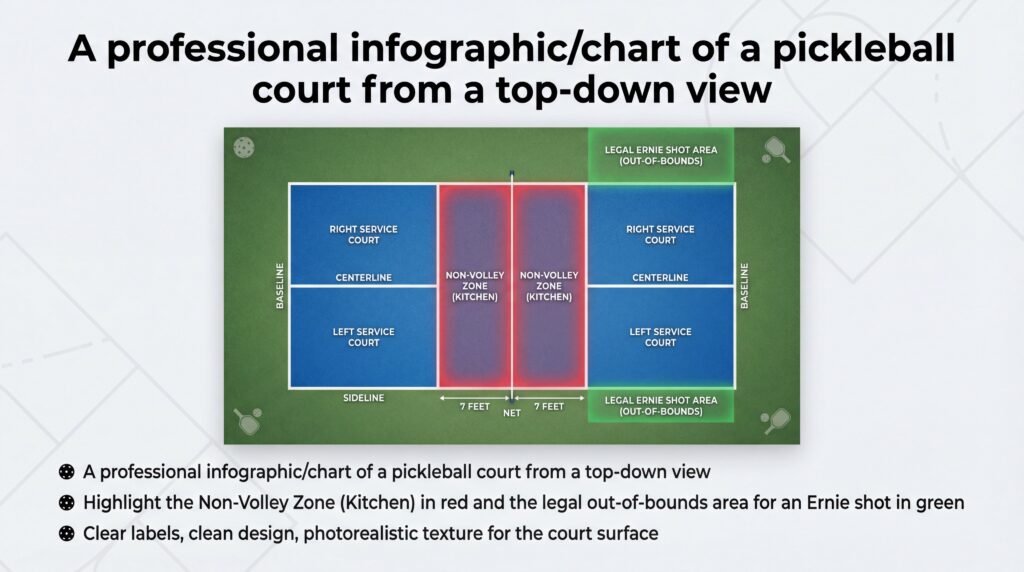
Think about it: the rules are very specific about where you can’t be.
Understanding the kitchen rules
The rules state you cannot volley a ball while standing in the non-volley zone or touching the kitchen line. The Ernie is legal because you are technically standing outside the court boundaries, not inside the kitchen.
Why stepping out of bounds is ok
Pickleball rules do not require you to stay inside the white lines. As long as your feet are established on the ground outside the sideline before you hit the ball, or you are in the air after jumping from outside the kitchen, the shot is clean.
Key Takeaway
An Ernie is legal as long as you don’t touch the kitchen or its lines before, during, or after the shot.
| Rule Aspect | Legal Status |
|---|---|
| Touching Kitchen Line | Illegal |
| Standing Out of Bounds | Legal |
| Hitting Ball Mid-Air | Legal |
How do you perform a basic Ernie shot?
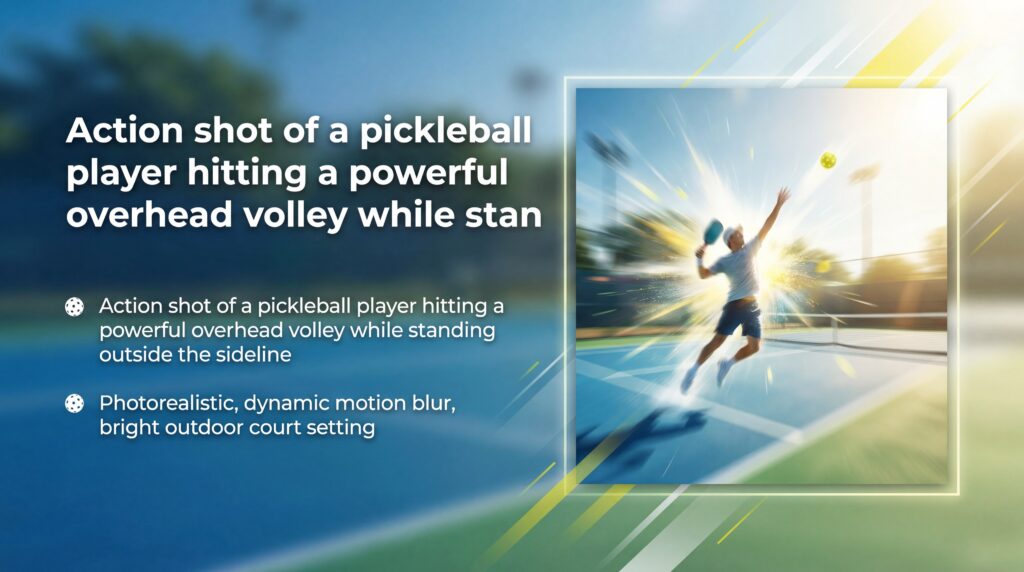
Here is the deal: you need to be fast and precise.
Setting up the dink rally
You cannot just run out of bounds whenever you want. You need to wait for your opponent to hit a dink that is moving toward your sideline. This “pulls” them into a predictable spot where they won’t expect your move.
The jump versus the step-around
You can either jump over the corner of the kitchen or simply step around the sideline into the out-of-bounds area. The key is to make sure your feet are fully planted outside the court before your paddle makes contact. You can find more tactical guides at bestpicklepaddle.com/how-to-setup.
Key Takeaway
Mastering the Ernie requires a mix of patient dinking and explosive lateral movement to the out-of-bounds area.
| Step | Action |
|---|---|
| 1. Bait | Dink the ball wide to the opponent’s sideline |
| 2. Move | Jump or step outside the sideline quickly |
| 3. Strike | Volley the ball down into the opponent’s court |
What are the common pickleball terms to know?
Want to talk like a pro? You need the lingo.
Why the Ernie is considered slang
While the official rulebooks describe the mechanics, players use the term “Ernie” as part of the sport’s unique culture. If you want to communicate effectively on the court, you need to know this slang.
Using a pickleball glossary
If you are new, the amount of terminology can be overwhelming. From “dinks” to “kitchens” to “Ernies,” it helps to keep a glossary handy to keep track of the unique vocabulary used in every match.
Key Takeaway
Learning terms like the Ernie is essential for communicating with partners and understanding high-level match commentary.
- The Kitchen: The 7-foot non-volley zone where you can’t hit volleys.
- Volley: Hitting the ball out of the air before it touches the ground.
- Sideline: The boundary line running the length of the court.
What makes the Ernie a funny pickleball term?

Exploring the Bert and Ernie connection
The sport is known for not taking itself too seriously. Because the standard version is called an Erne, the community naturally named the cross-court poaching version a “Bert.” You can see more funny terms that make the sport unique.
Why nicknames matter in pickleball
Nicknames for shots make the game more accessible and social. It is much easier to tell your partner “Watch out for the Ernie!” than it is to describe a “lateral out-of-bounds volley maneuver.”
Key Takeaway
The name “Ernie” reflects the lighthearted and social nature of the pickleball community.
| Name | Origin/Context |
|---|---|
| Ernie | Named after Erne Perry |
| Bert | A variation of the Ernie (poached) |
| Vibe | Social, fun, and easy to remember |
When is the best time to use an Ernie?
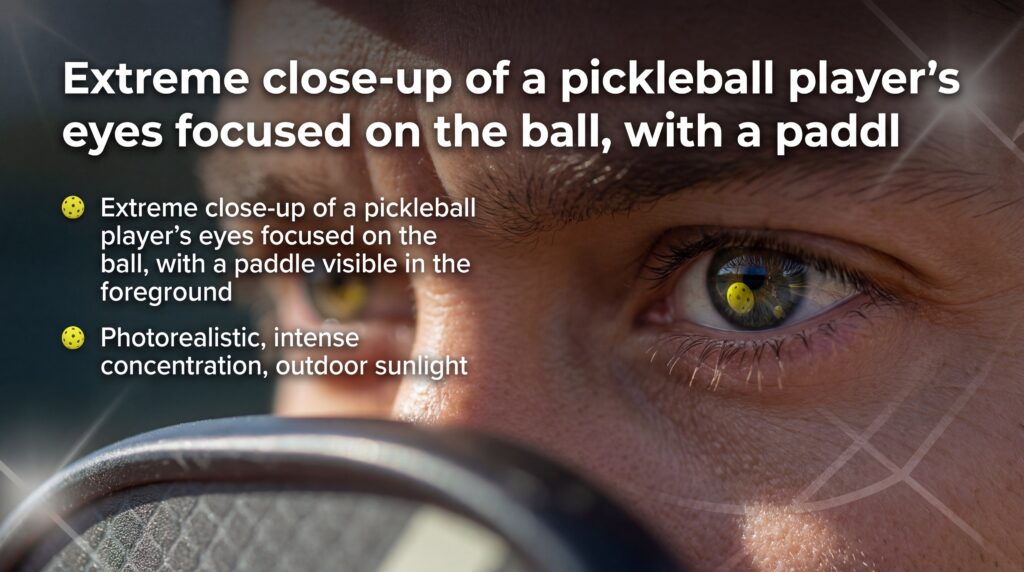
You have to be a student of the game to time this right.
Reading your opponent’s paddle face
You should look for a moment when your opponent’s paddle is tilted toward your sideline. This indicates they are about to hit a cross-court dink that will travel right past the area where you want to jump.
Recognizing the sideline opportunity
The best time is when you have pushed your opponent deep into their own corner. When they are struggling to reach the ball, they are less likely to notice you moving toward the sideline for the kill.
Key Takeaway
Timing is everything; you must wait for a wide dink and an opponent who is distracted by their own footwork.
| Opportunity | Signal |
|---|---|
| Opponent Focus | Looking down at the ball |
| Ball Path | Heading toward your sideline |
| Your Position | Already established at the kitchen line |
What are the risks of trying an Ernie?
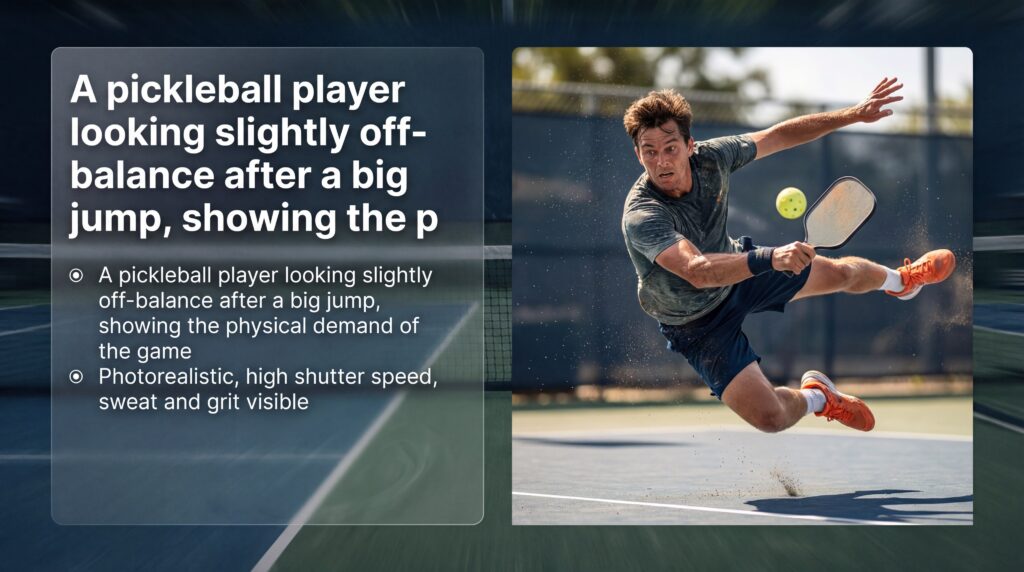
Don’t be fooled: it’s a “high-risk, high-reward” maneuver.
Being left out of position
If you jump outside the court and miss the ball, your entire half of the court is now wide open. Your partner will have to scramble to cover the massive gap you left behind, often leading to a lost point.
Falling into the kitchen
A common mistake is landing on the kitchen line or inside the non-volley zone after the shot. If any part of you touches that line while you are finishing the volley motion, you lose the point immediately.
Key Takeaway
The Ernie can leave you vulnerable if your timing or balance is off during the execution.
- Missed Shot: Results in an open court for your opponents to exploit.
- Foot Fault: Landing on the line causes an immediate loss of the rally.
- Injury Risk: Aggressive jumps require proper landing mechanics to avoid injury.
How can you practice your Ernie timing?
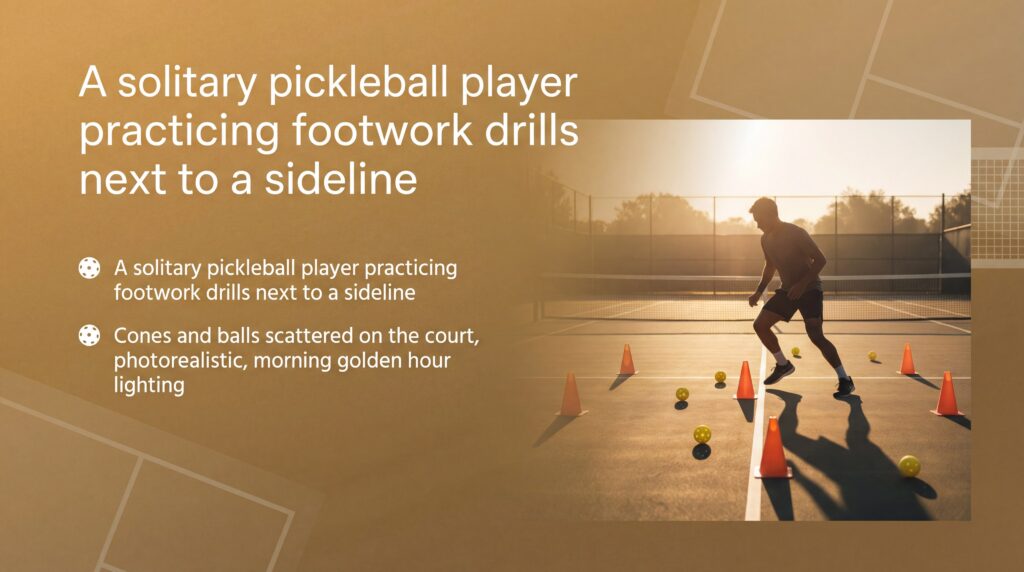
Practice makes permanent, so start slow.
Solo drills for footwork
You don’t even need a ball to start. Practice the “shadow” movement of standing at the kitchen line and jumping or stepping to the out-of-bounds area while keeping your balance and staying clear of the lines.
Partner drills for coordination
Have a friend hit dinks specifically toward your sideline. Practice waiting until the very last second before you make your move to keep the element of surprise intact.
Key Takeaway
Consistency comes from repeating the footwork until you can move outside the court without looking at your feet.
| Drill Type | Focus Area |
|---|---|
| Shadow Practice | Balance and line awareness |
| Target Dinking | Timing the jump with the ball |
| Partner Communication | Learning when to signal the move |
What is the difference between an Ernie and a Bert?
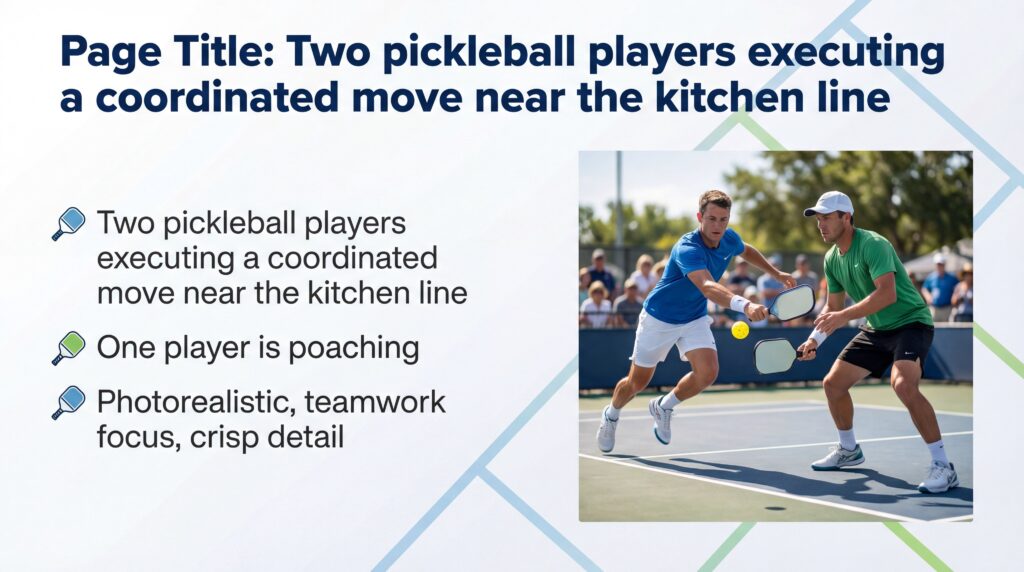
The best part? You can do this on either side if you have the teamwork.
Poaching from your partner’s side
An Ernie is a shot you take on your own side of the court. A “Bert” is when you run across your partner’s side of the court to hit the volley outside their sideline—it is essentially an “Ernie” done on the “wrong” side.
Communication is key
You should never try a Bert without telling your partner first. Since you are running right in front of them, you risk a collision or a double-hit if you aren’t perfectly synced up.
Key Takeaway
While the mechanics are similar, the Bert is much more aggressive and requires high-level team coordination.
| Shot Name | Who Hits It? | Location |
|---|---|---|
| Ernie | You | Your sideline |
| Bert | You | Partner’s sideline |
Frequently Asked Questions
Can I hit an Ernie if the ball bounces first?
Technically, if the ball bounces, it is no longer a volley. You can still hit it from outside the court, but the main advantage of the Ernie—striking the ball early and high—is lost once it hits the ground.
What’s the best way to defend against an Ernie?
The best defense is to keep your dinks toward the middle of the kitchen. If you don’t hit the ball toward the sidelines, you don’t give your opponent the space they need to jump outside.
Can I touch the net during an Ernie?
No. Touching the net, the net posts, or the opponent’s side of the court with your paddle or body is a fault, regardless of where your feet are standing.
Do I have to jump to do an Ernie?
No, you can simply step around the post or sideline. As long as both feet are established out of bounds before you hit the ball, the shot is legal.
Is the Ernie only for professional players?
While it is an advanced move, intermediate players can use it too. It just requires good balance and the ability to recognize when a wide dink is coming your way.