The Ultimate Pickleball Scoring Guide
Do you get confused when people shout three different numbers on the court? It is frustrating to stop your game because nobody knows who serves next or what the current tally is. This guide makes you an expert so you can play with total confidence and zero worry.
Table of Contents
What is the basic Pickleball Scoring Guide for beginners?
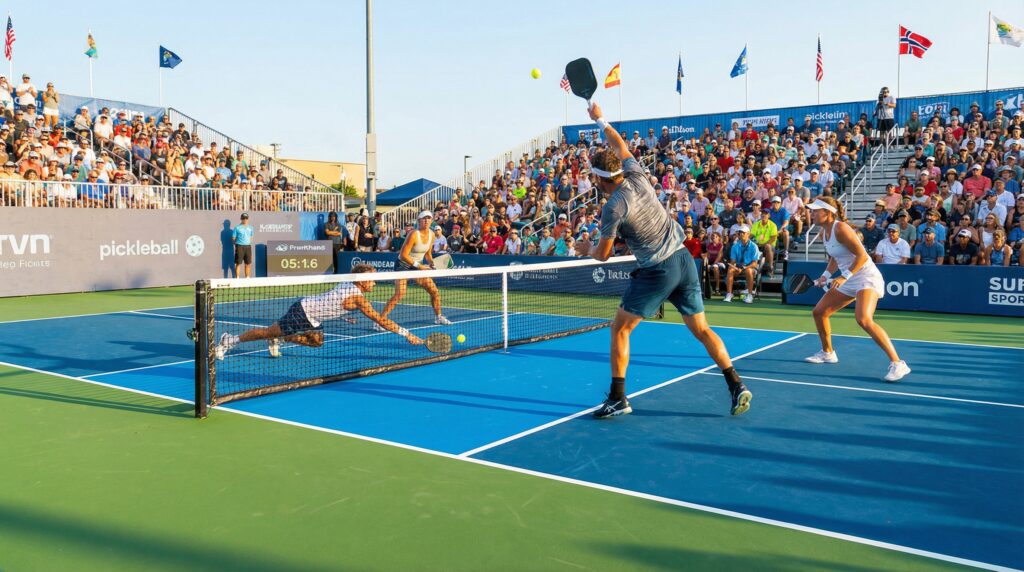
The basic rules state that you only earn points when your side holds the service according to this Pickleball Scoring Guide. Beginners must focus on reaching eleven points while maintaining a lead of at least two points over the rivals. Starting positions stay fixed until your team wins a point during your serve turn.
How do points accumulate?
Here is the deal. You only get a point if your side hits the ball and the other side misses while you are the server. If the other team wins a rally while you serve, nobody gets a point, and the turn moves on.
- Points only count on your serve.
- Games go until someone gets eleven.
- Leads must be at least two points.
- Rallies decide who earns the score.
Who scores during rallies?
You might be wondering. Only the serving side increases their tally after a successful winning shot is made. The receiving team wants to stop the server so they can get their own turn to serve and score.
- Service determines all point chances.
- Receivers focus purely on defense.
- Side outs move the ball away.
- Points stall during the receiving phase.
Key Takeaway: Beginners must serve to score points and reach eleven for victory.
| Scoring Element | Beginner Rule | Requirement |
|---|---|---|
| Point Capture | Server Only | Win the Rally |
| Game End | 11 Points | 2 Point Lead |
| Starting Side | Right Court | Even Team Score |
This simple flow ensures that games stay competitive and rewarding for the serving team.
How does the Pickleball Scoring Guide track doubles points?
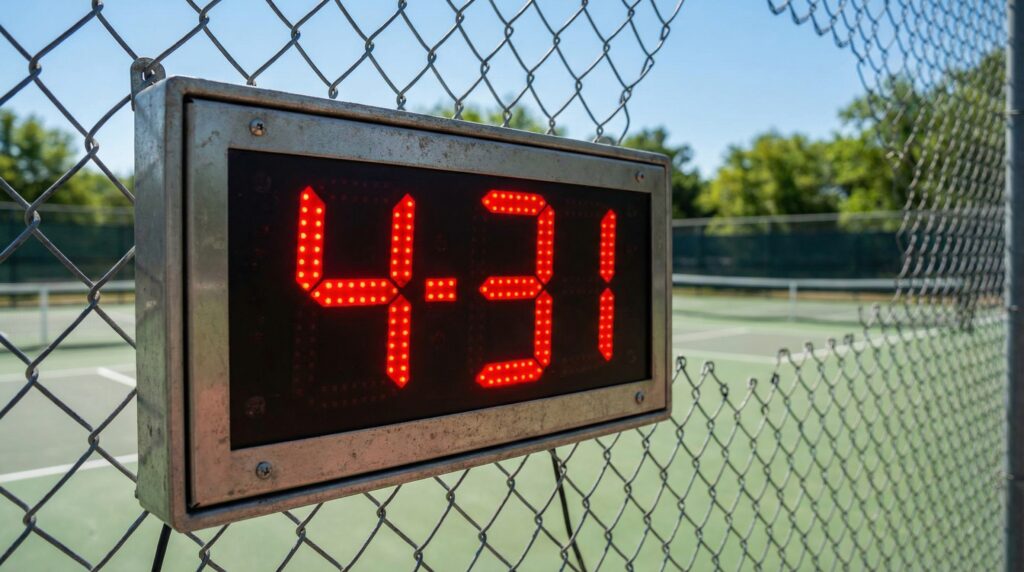
The Pickleball Scoring Guide uses a three-number sequence to identify the score and which partner is currently serving. You will call out your score first, then the opponent’s score, and finally your server number. This system prevents players from serving out of turn during fast matches.
What do the three numbers mean?
Think about it. The first number is your team’s score, and the second is the score of the other team. The third number tells everyone if the first or second partner is holding the paddle to serve.
- Number one is the first server.
- Number two is the second server.
- Scores reset after a side out.
- The order follows team turns.
How do players move?
Ready for the good part? Partners only switch sides of the court after their team wins a point on their own serve. If you lose a rally, you stay exactly where you are for the next play to begin.
- Rotate after you win a point.
- Stay still on every loss.
- Right side starts at even scores.
- Left side handles the odd scores.
Key Takeaway: Doubles requires calling three numbers to identify server turns and team progress.
| Sequence Number | Meaning | Purpose |
|---|---|---|
| First Digit | Your Score | Track Team Progress |
| Second Digit | Their Score | Opponent Progress |
| Third Digit | Server ID | Player Service Order |
Knowing these numbers helps you and your partner stay in the right spots.
Why does the Pickleball Scoring Guide differ in singles?
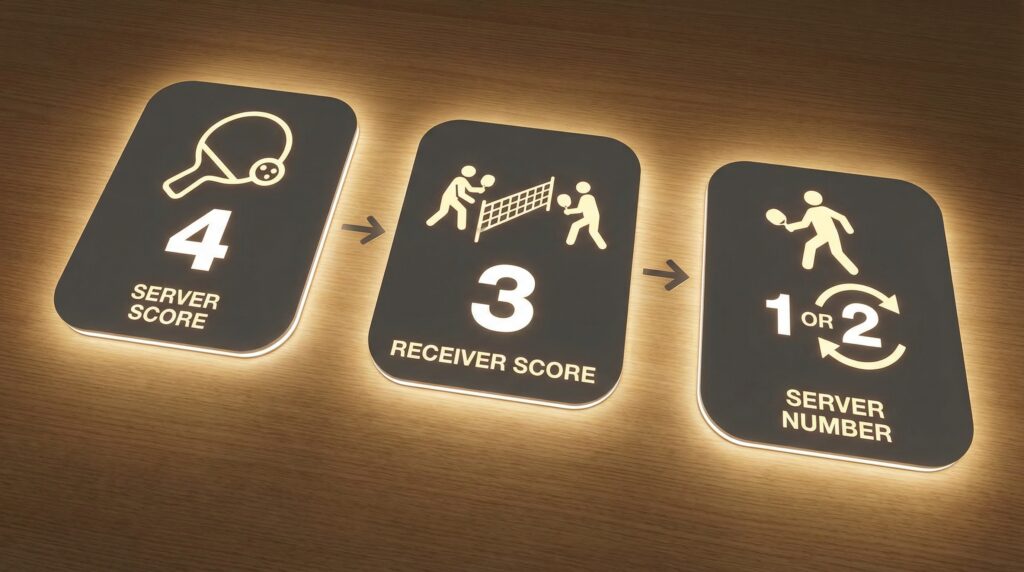
Singles play simplifies the vocal call by removing the third server number entirely from this Pickleball Scoring Guide. You only track two digits because the service always moves back and forth between the two opponents. Your serving side is determined by whether your personal score is an even or odd integer.
Which score dictates the side?
What is the real story? Your current score tells you exactly which side of the baseline you must stand on to serve. Even numbers like zero, two, or four require you to serve from the right-hand court.
- Even scores use the right side.
- Odd scores use the left side.
- Zero is counted as even.
- Positions shift after every point.
How many numbers get called?
This is where it gets interesting. You announce only two figures representing your own tally and the total for the person across the net. This keeps the game moving fast since there are no partners to track on the court.
- Two numbers define the score.
- Server score is always first.
- Receiver score follows second.
- Brief calls help you focus.
Key Takeaway: Singles scoring uses two numbers and links serving side to even or odd scores.
| Feature | Singles Scoring | Logic |
|---|---|---|
| Call Format | 2 Numbers Only | No Partner Exists |
| Serve Side | Score Dependent | Even=Right / Odd=Left |
| Rotation | None Required | Individual Play Only |
This streamlined approach allows solo athletes to focus more on their shot placement and movement.
How do you call scores using the Pickleball Scoring Guide?
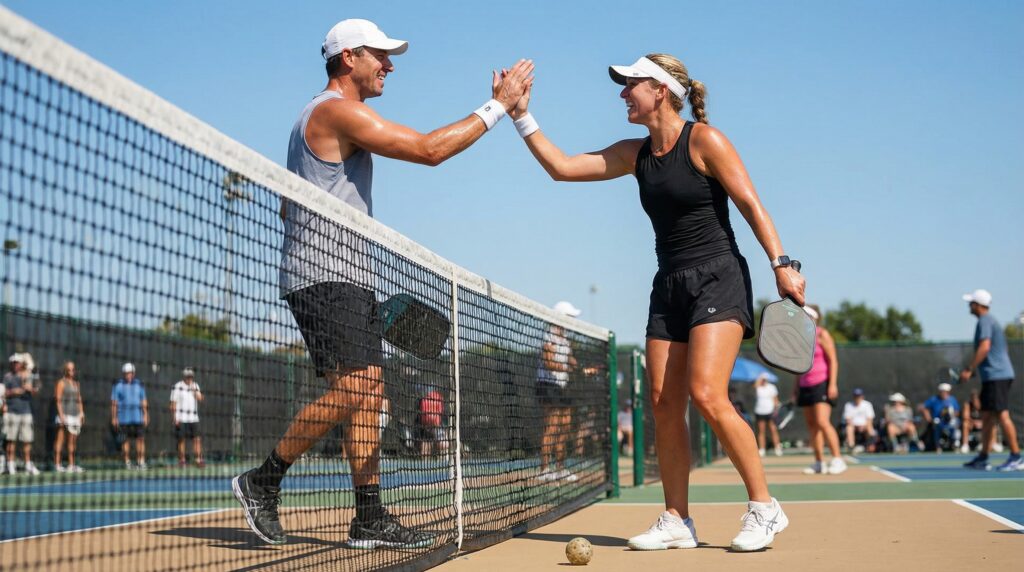
You must announce the full score loudly before your paddle makes contact with the ball during the serve. This Pickleball Scoring Guide requirement ensures that every participant is ready and agrees with the current match status. Failure to call the score can lead to a fault or a forced replay in a tournament.
When should you shout?
Here is the deal. You must finish speaking all the numbers before your paddle face hits the pickleball for the service. This vocal rule provides transparency and builds professional habits during every local or regional game session.
- Call before the ball hit.
- Use a very loud voice.
- Wait for the receiver’s eyes.
- Consistency builds better rhythm.
How are mistakes corrected?
You might be wondering. Any player on the court can stop the action if they hear an incorrect score being announced. Fixing the count early prevents long arguments that could ruin the fun of the match for everyone.
- Halt play immediately for errors.
- Talk to all four players.
- Check the previous serve score.
- Accuracy prevents technical faults.
Key Takeaway: Call scores loudly before serving to maintain match integrity and player agreement.
| Communication Step | Action | Benefit |
|---|---|---|
| Score Call | Loud Announcement | Total Transparency |
| Strike Ball | Serve Motion | Legal Play Starts |
| Error Check | Verbal Confirmation | Fair Match Result |
Proper communication keeps the energy high and ensures the game stays fair for all.
What win margin rules define the Pickleball Scoring Guide?
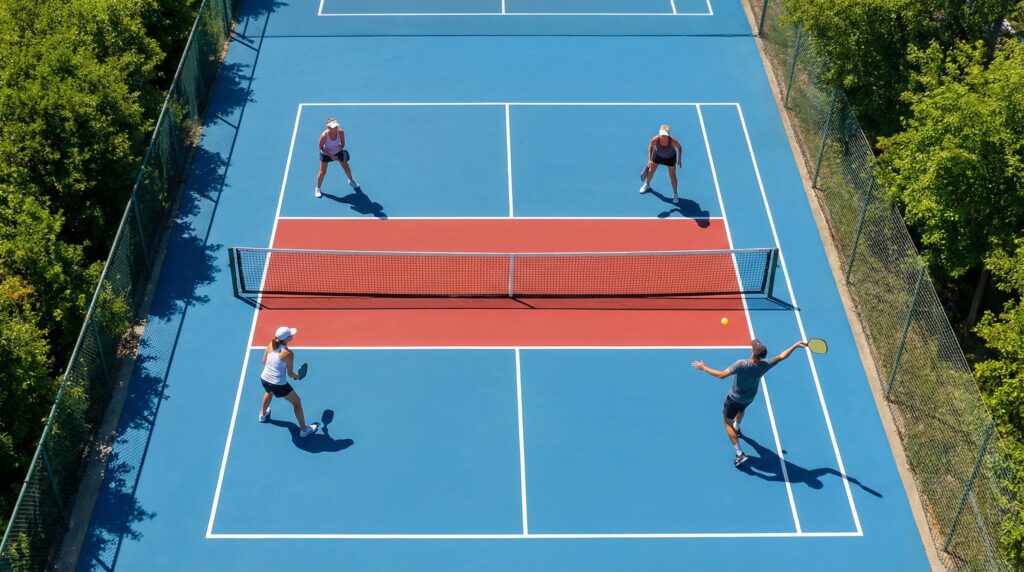
Victory requires you to reach the target score while holding a two-point cushion over the other team in this Pickleball Scoring Guide. Games do not end at eleven if the score is tied at ten-ten during a very close match. This rule forces you to prove your skills by winning consecutive rallies when the pressure is at its highest.
Why play until eleven?
This is the kicker. Eleven points provides a balanced game length that tests your stamina without making you too tired to play again. This standard fits well into daily schedules and large tournament brackets where many games happen.
- Standard games use eleven.
- Time is used effectively.
- Skill is tested properly.
- Pace stays very high.
What is a deuce situation?
Ready for the good part? Play will continue indefinitely until one team finally gains the necessary two-point lead to win. These extended sessions are often the most exciting parts of competitive events because every shot counts so much.
- Margin must be two.
- Scores can go past eleven.
- Tension rises every single hit.
- Strategy shifts toward safety.
Key Takeaway: Games must conclude with a two-point lead to ensure a clear winner.
| Win Condition | Metric | Outcome |
|---|---|---|
| Target Score | 11 Total Points | Minimum Win Goal |
| Lead Gap | 2 Point Difference | Mandatory Ending |
| Tie Score | Keep Playing On | Sudden Victory Needed |
Extended games test your mental toughness as you fight for those last two points.
How does the side out impact the Pickleball Scoring Guide?
A side out occurs when the serving team loses their turn and the ball moves to the opposing side. The Pickleball Scoring Guide explains that this transition happens after both partners have failed to win their rallies. Once the side out happens, the new serving team always starts their turn from the right-hand court.
Who gets the ball?
What is the real story? Service shifts only after the second server on a team loses a rally in a doubles match. This ensures that every player gets a fair chance to impact the scoreboard during the game.
- Ball moves across the net.
- Receivers become the servers.
- Scores stay exactly the same.
- Momentum resets for everyone.
How do new turns start?
This is where it gets interesting. The player standing on the right side of the new serving team begins the turn as server number one. They must call the score with a “one” as the third digit to signal the start.
- Start from the right side.
- Use server number one.
- Update the third number.
- Reset the service cycle.
Key Takeaway: Side outs transfer scoring opportunities to the opposing team after two serve losses.
| Event | Action | Responsibility |
|---|---|---|
| First Serve Loss | Pass to your partner | Server Number Two |
| Second Serve Loss | Call the Side Out | Team Turn Ends |
| New Service Start | Serve from Right Side | Server Number One |
Understanding these shifts helps you stay ready for your next scoring opportunity.
When should you use Pickleball Scoring Guide server numbers?
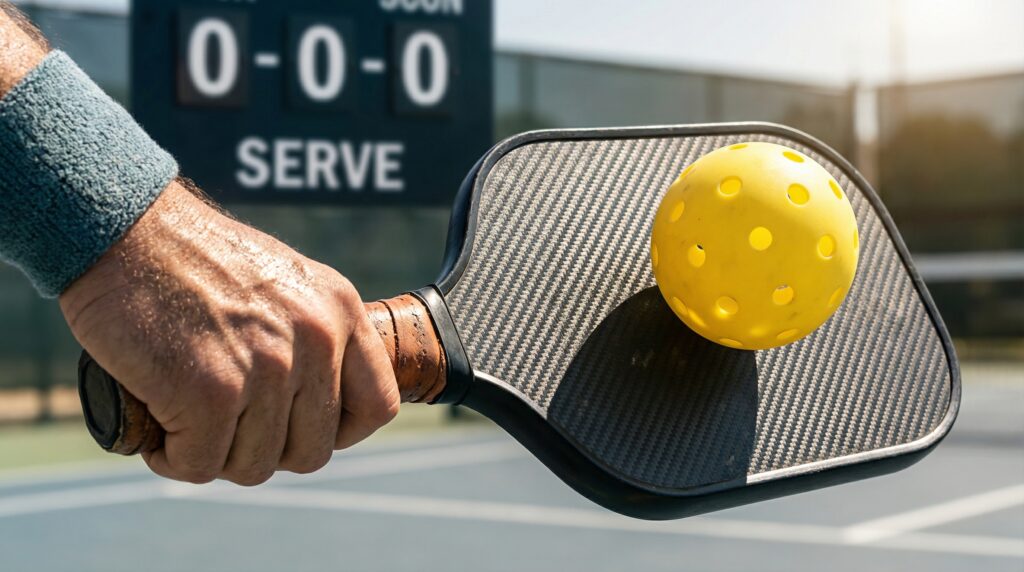
Server numbers help you track which teammate has already used their turn within a single side out cycle in this Pickleball Scoring Guide. Using “one” and “two” as identifiers makes the job of the referee or the players much easier. These numbers reset every time a side out occurs and the ball moves to the rivals across the net.
Why identify the first server?
Look: Marking the first server allows the whole team to know when their secondary scoring chance is about to begin. It provides a clear roadmap for the service rotation so nobody gets confused about their turn.
- Start with number one.
- Anchor the team order.
- Clarify court spots early.
- Avoid out-of-turn faults.
How do the numbers reset?
You might be wondering. Every side out brings a fresh start where the new team begins their service turn with server number one. This cycle repeats over and over until the match reaches its conclusion with a final winning point.
- Reset after side outs.
- Always start at one.
- Track numbers internally.
- Clean starts prevent arguments.
Key Takeaway: Server numbers one and two track service turns within each team’s side out cycle.
| Server ID | Sequence | Team Role |
|---|---|---|
| Server One | First Service Attempt | Lead Scoring Turn |
| Server Two | Final Service Attempt | Backup Scoring Turn |
| Side Out | Full Team Transition | Reset Server Number |
Keeping track of your server number is a vital part of basic match etiquette.
What equipment affects Pickleball Scoring Guide performance?
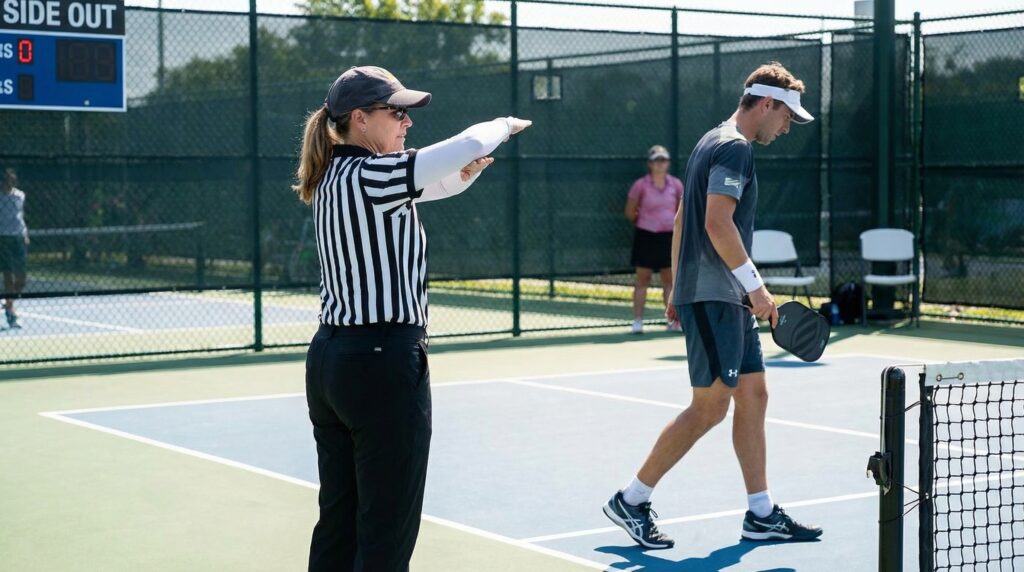
High-quality gear allows you to execute precise shots that lead to more points on the scoreboard. The Pickleball Scoring Guide is easier to master when your paddle provides the control needed to win long rallies. Better tools reduce unforced errors that would otherwise hand free points over to your opponents during the game.
Does surface material matter?
This is the kicker. A carbon fiber face offers superior friction for creating difficult spin shots that can baffle the receiving team. This technological edge helps you win more serves and increase your team score much faster than before.
- Texture grabs ball faces.
- Spin creates low bounces.
- More points are earned.
- Gear stays durable longer.
How does power help?
Ready for the good part? Modern core materials determine how much energy returns to the ball upon impact with your paddle face. Selecting the right density allows for powerful drives that penetrate the defensive lines of your rivals effectively.
- Polymer cores stop vibration.
- Carbon faces increase speed.
- Power ends rallies quickly.
- Points come through aggression.
Key Takeaway: Professional gear enhances point-scoring potential through better control and power.
| Equipment Type | Material Benefit | Scoring Impact |
|---|---|---|
| Power Paddle | Carbon Fiber Face | Faster Point Wins |
| Spin Paddle | Textured Surface | Higher Error Rates |
| Control Paddle | Soft Polymer Core | Fewer Unforced Errors |
Analysis shows that the right equipment translates your physical skills into scoreboard progress.
How do tournaments apply the Pickleball Scoring Guide?
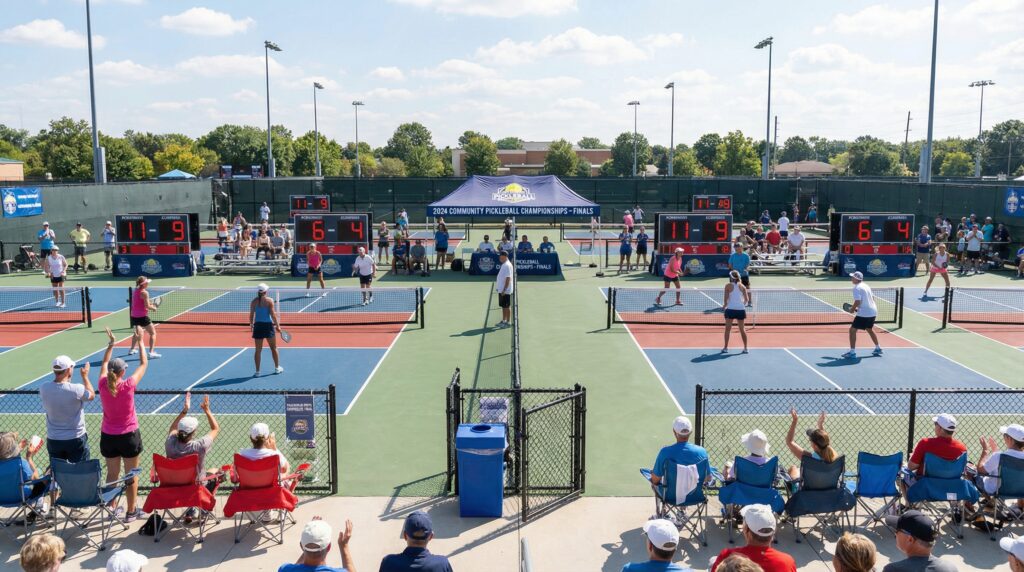
Tournaments use professional referees to call the score and manage the flow of the match in this Pickleball Scoring Guide. This formal environment requires you to listen carefully and follow the vocal rules to avoid losing points on technical fouls. Referees watch your feet and your paddle to ensure every play is legal and fair.
What format do pros use?
The best part? Elite athletes compete in matches where winning two out of three games secures the overall victory for the team. This structure provides enough play time for tactical adjustments and shifts in momentum during the day.
- Best of three format.
- Games go to eleven.
- Switch sides at six.
- Official refs call score.
How are fouls handled?
Think about it. Using equipment that does not follow official rules can lead to immediate point penalties for your team. Referees monitor behavior and paddle thickness to maintain a fair competitive field for every single participant in the event.
- Fouls award free points.
- Warnings come first often.
- Behavior affects the score.
- Rules apply to everyone.
Key Takeaway: Tournament play enforces strict scoring protocols and uses multi-game formats for fair results.
| Tournament Rule | Standard Requirement | Outcome |
|---|---|---|
| Match Style | Best of Three Games | Longer Total Playtime |
| Score Limit | 11 or 15 Points | Clear Match Victory |
| Side Switch | Mid-Game Change | Equal Court Advantage |
Playing under official rules prepares you for the highest levels of competitive sport.
How can players master the Pickleball Scoring Guide fast?
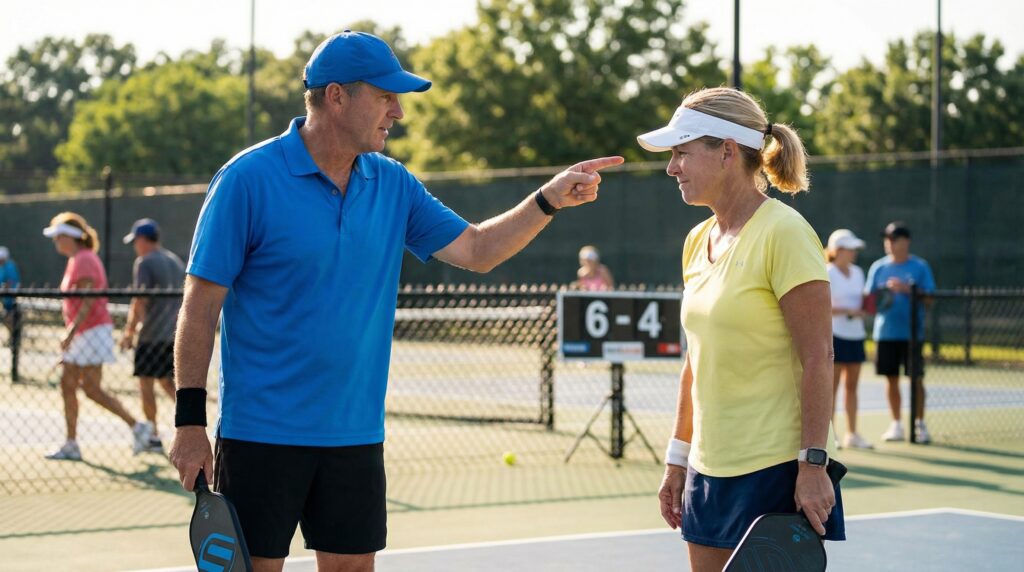
Repetition through practice matches remains the most effective way to internalize the complex scoring system. This Pickleball Scoring Guide recommends vocalizing the score even during casual play to build the muscle memory required for future success. Experienced players often mentor newcomers by correcting their calls in real-time while they are on the court.
Which drills help memory?
Here is the deal. Shadow scoring involves calling the score out loud while watching professional matches to simulate the pressure of a real game. This mental exercise sharpens your ability to track server transitions without making you physically tired from playing.
- Watch professional videos.
- Call scores before refs.
- Track every server shift.
- Practice during solo time.
How do mentors help?
You might be wondering. Senior players can provide immediate feedback when you miss a server number or call the wrong sequence of digits. Listening to these friendly corrections helps you avoid repeating the same mistakes in your next big match.
- Experts guide every call.
- Learning happens in play.
- Clarification prevents errors.
- Growth requires open minds.
Key Takeaway: Regular vocal practice and professional equipment help players master scoring sequences effectively.
| Mastery Method | Activity | Result |
|---|---|---|
| Shadow Calling | Watch Pro Matches | Mental Score Accuracy |
| Practice Play | Casual Game Rounds | Physical Muscle Memory |
| Peer Review | Ask Senior Players | Quick Vocal Correction |
Consistent practice transforms the three-number call into a natural habit for any player.
Mastering these rules makes you a respected competitor on any court you visit. By combining vocal accuracy with the right strategy, you ensure every game remains fair and enjoyable for your team and your rivals. If you want to improve your gear or learn more about the game, please contact us to find the perfect tools for your next victory!
FAQ
What happens if I forget the score?
You should pause the play and talk with all the other players to reach an agreement on the last known tally. Usually, players can recall the last server and who won the point to fix the count.
Why does the first server only get one chance at the start?
This special rule prevents the starting team from having an unfair double advantage at the beginning of the match. It helps balance the game by moving the serve to the other side much faster.
Can the receiving team call the score?
The server must always be the one to call the score to signal that they are ready to begin the point. If the server stays silent, the receiver can ask them to speak before the ball is hit.
Is the score different in tournament play?
Most tournaments follow the standard rules but some might play to fifteen or twenty-one points in special formats. You should always check the event rules before your first match starts.
What if my partner calls the wrong number?
You should correct them immediately before the paddle contacts the ball to avoid a service fault. If the ball is already in play, finish the rally and then discuss the error before the next point.